Psychedelic medicine is reemerging in national conversation.
The U.S. Secretary of Health and Human Services, Robert F. Kennedy Jr., is a proponent of psychedelic therapy, and the U.S. Department of Veterans Affairs has conducted research on its effectiveness.
In April 2026, the Trump Administration signed an executive order “to accelerate innovative research models and appropriate drug approvals to increase access to psychedelic drugs that could save lives and reverse the crisis of serious mental illness in America.”
But before the white coats and sterile labs of modern medicine, psychedelics were long used by Indigenous people in South America — and the way they’re understood, used, and studied has shifted dramatically over time, said Georgia Tech historian Taylor Elizabeth Dysart.
Dysart, an assistant professor in the School of History and Sociology, studies psychedelic medicine from the 1850s through the present, examining how it has moved from communal use to renewed medical interest. She asks who shaped those transitions, and what’s been left out.
“More inclusive histories — ones that introduce us to new characters, stories, and places — give us a more accurate and honest take on the past. And these histories, in turn, open the possibility for more creative interventions into psychedelic medicine and science,” Dysart said.
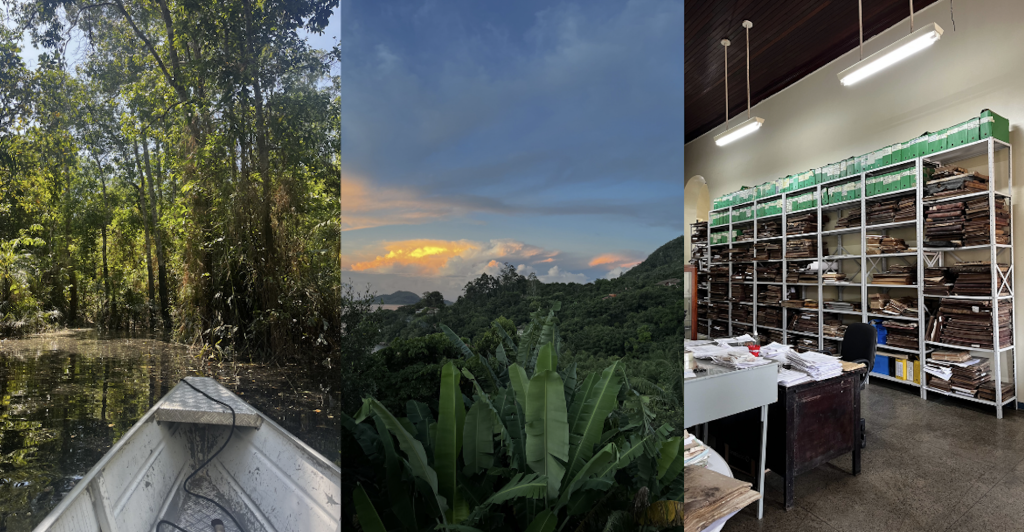
Images from Dysart's ethnographic fieldwork and archival work in Brazil. From left to right: traveling by boat on the Amazon River, the state of Santa Catarina in southern Brazil, and the state archives of Manaus, the capital city of Amazonas, Brazil.
Early Ayahuasca Use
Dysart’s research focuses on ayahuasca, an Amazonian plant brew most often made from the Banisteriopsis caapi vine and the leaves of Psychotria viridis, which contain the psychedelic compound dimethyltryptamine (DMT).
Historically, Dysart explains, Indigenous communities used ayahuasca for communal or social support — to connect with an ancestor or predict war in the case of the Shuar and Tukano people, for example. If it was used for a health purpose, it was often the opposite of how it is now: healthy people or elders would take it to understand or support someone who was ill, rather than the sick person themselves.
“So it's not about curing some type of what we would now think of as a mental health problem,” Dysart said. “In this spectrum of its very long history, the fact that you would take it if you were sick is a pretty modern development.”
Witchcraft and sorcery were also a traditional part of the ecosystem around people who consume ayahuasca, an aspect often excluded from medical research today. But even for those who don’t believe in witchcraft, that connotation acted as a warning, Dysart explained. Ayahuasca can be made with over 30 different plants, and some of them are deadly.
“It signals that you should be cautious, that you should take it seriously, and that it has potential harms beyond witchcraft, like toxicity,” she said.
In the 1880s, Ayahuasca began to move beyond Indigenous communities, picked up by the rubber tappers who migrated to the Amazon for work during the rubber boom.
Ayahuasca churches — religious movements that borrow from Catholicism, African diasporic practices, spiritualism, and Indigenous rituals — began to emerge in the 1930s, with members consuming ayahuasca as a sacrament. (One of these, a Brazilian church called União do Vegetal, would go on to become the first to gain a religious exemption for ayahuasca use in the U.S. in 2006.) These churches introduced the rural practice to more urban communities.
“Anthropologists call it an ayahuasca diaspora — this idea that ayahuasca moves with communities as they move elsewhere,” Dysart said.
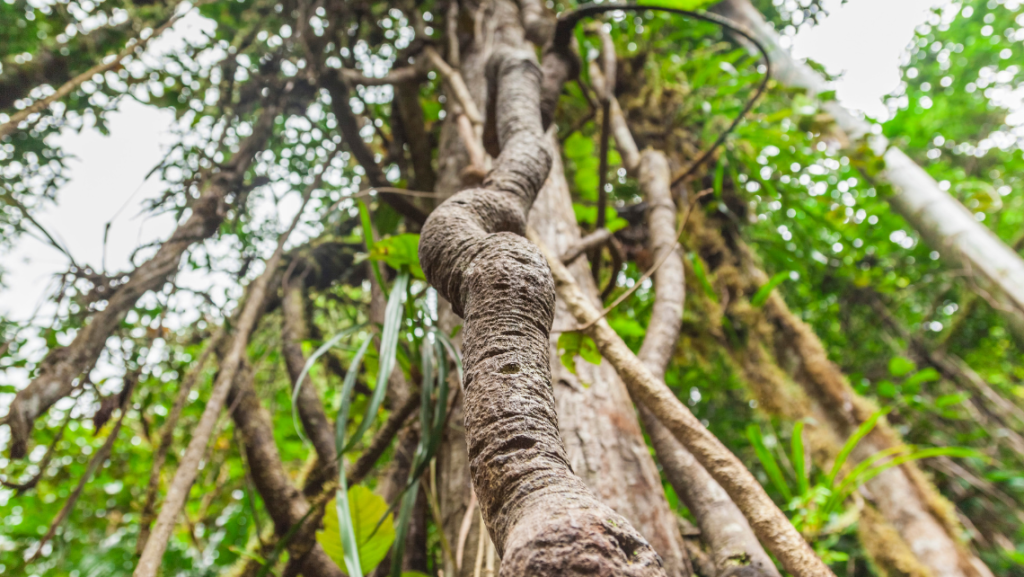
The Banisteriopsis caapi vine, used along with the leaves of a plant containing DMT to brew ayahuasca.
Early Documentation and Research
DMT is currently being used in clinical trials at Yale University. But five hundred years ago, Jesuit missionaries viewed it differently. In the first written documentation of the drug, they described it as a demonic possession.
It wasn’t until 1852 that a network of researchers started to form, beginning with an English botanist named Richard Spruce. He wrote about the intense physical reaction ayahuasca elicited in the Tukano people in Brazil.
“Researchers are initially interested not in the idea of the expanding consciousness, but the intense physiological response that it generates,” Dysart said. “Which is interesting now because labs are trying to produce a synthetic version that will not cause you to have any type of uncomfortable bodily reaction. But historically, the purgative elements are a huge part of what is understood to make it effective and helpful.”
In the following decades, more researchers took up the work in Latin America, collaborating across disciplines such as botany, anthropology, ethnobotany, pharmacology, and, eventually, neuroscience and psychiatry.
“In the U.S., you have this dramatic rise in research and use in the 50s, a fall in the 60s, and then a slow resurgence,” Dysart said. “But I would argue that in Latin America, if you look at the northwestern Amazon along the borderlands of Peru, Brazil, and Colombia specifically, you have more of a steady flow of research from the 1850s to the present.”
1960s: Political Crosshairs
The rise and fall of psychedelics in the U.S. was largely due to political pressure.
In the 1950s and 1960s researchers in the U.S. and Canada started studying LSD and mescaline as treatments for alcohol addiction and for depression and anxiety among people with terminal diagnoses.
The sample sizes were small, but it was found to be effective, vaulting psychedelics into popular culture — until President Richard Nixon became president and started his war on drugs in 1971. He declared illegal drug use “public enemy number one” and moved DMT, LSD, psilocybin, and related substances to Schedule 1 controlled drugs. Subsequent administrations accelerated the movement, making it increasingly difficult for researchers in the U.S. to receive approval to study psychedelics even in highly controlled settings.
“Research still happens in that period, but on a much smaller scale,” Dysart said.
Some U.S. researchers moved to underground labs, while others moved their work to Latin America, working in Peru, Colombia, Brazil, and Ecuador. It was not until the 1990s that scientists were able to relegitimize their interest in psychedelics.
President Nixon declared the "War on Drugs" in 1971.
1990s: Renewed Medical Interest
Dysart references a book by Nicholas Langlitz, Neuropsychedelia, which argues that the establishment of neuroscience as a prominent scientific field in the 1990s spurred scientific and cultural interest in brain science. American scientists working in Brazil and other parts of Latin America brought their psychedelic medicine research back to the U.S., sharing their work with a more receptive audience.
“It fit the cultural moment," Dysart said.
Scientists were again granted funding and approvals for psychedelic research in the U.S. The drugs also received an important push from veterans groups, who rallied bipartisan support for their potential as a post-traumatic stress disorder treatment in the 2000s. This steady momentum brings us to today, with psychedelic medicine back in the national debate.
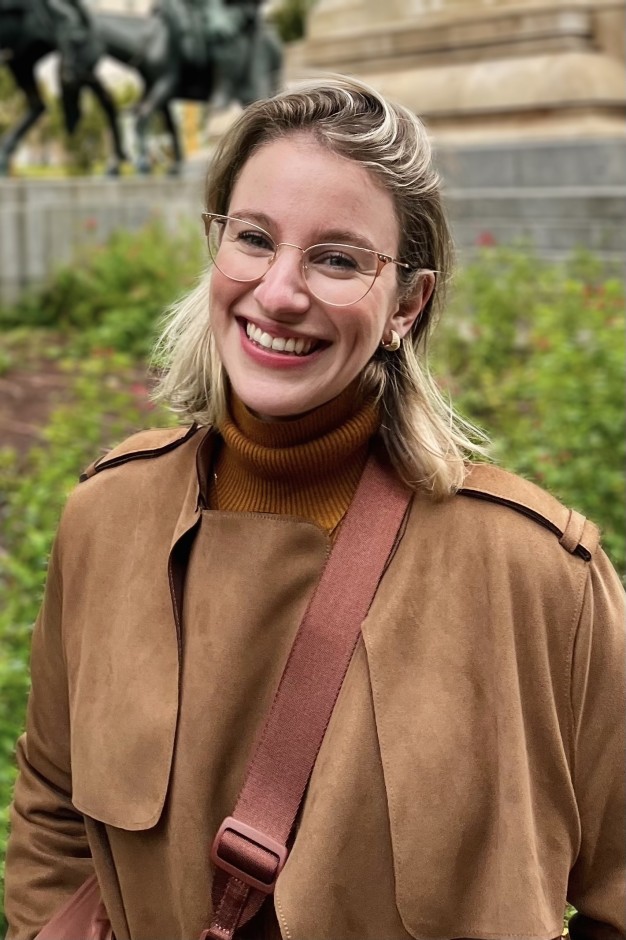
Dysart teaches a course on the history and anthropology of drugs at Georgia Tech. She is also working on a book called The Psychedelic Century: The Amazonian Origins of the Global Science and Medicine of Hallucinogens.
Learn more about her research.
Psychedelic Medicine Today
Today, psychedelic medicine poses promise and challenges alike, Dysart said. The most active work of interest to the public is currently in psychiatry, psychology, and neuroscience.
In these areas, researchers study how psychedelics such as LSD, psilocybin, and DMT can treat psychiatric conditions such as post-traumatic stress disorder and depression that have proven resistant to other treatments. Psychedelics may also help reduce daily dependence on medicines.
“Some studies demonstrate that you need very few sessions of psychedelic therapy or psychedelic-assisted psychotherapy in order to see a dramatic improvement for treatment resistant-depression, whereas treatment for depression might require SSRIs for years or decades,” Dysart explained.
However, the side effects and even the exact way that the psychedelics work are not completely understood. Psychedelics act on the 5-HT2A receptor in the brain, but the way in which they do so and produce a therapeutic outcome is not yet clear.
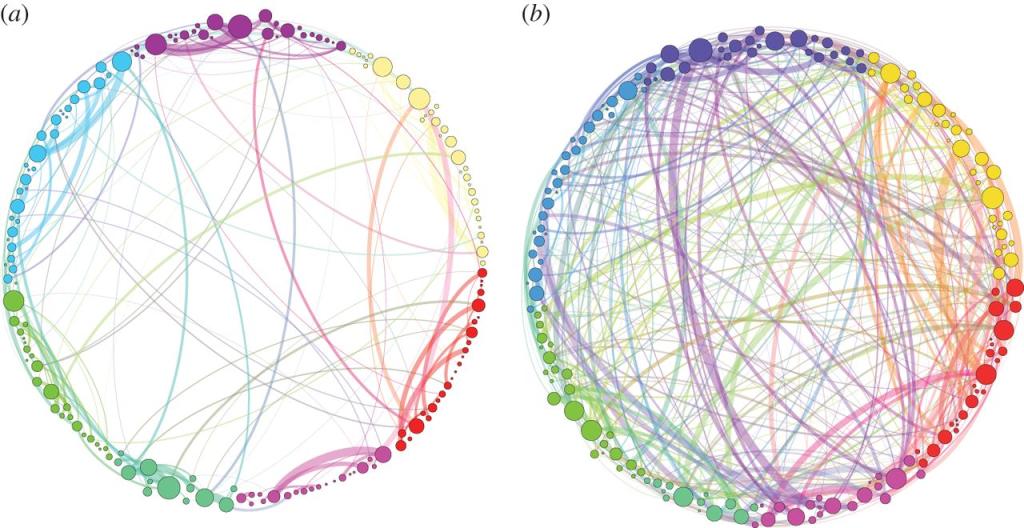
Brain connectivity on a placebo (left) vs. psilocybin (right). Image from a brain study in the Journal of the Royal Society Interface.
Rethinking Psychedelic Exceptionalism
Despite these unknowns, Dysart says she sees an idea of “psychedelic exceptionalism” taking hold among researchers, users, and venture capitalists — the belief that this class of drugs is inherently less harmful and ultimately more beneficial compared to other medicines.
The sentiment comes in part from the drug's controversial history, causing enthusiasts to now see any friction toward its approval as something to be downplayed. But it also contrasts with the warnings and cautious communal use seen in earlier history.
“There’s a refrain in psychedelic spaces that they're the next “wonder drug” and that they're not addictive. And I think both of those things are dangerous claims to make,” she said.
"To say that they're a wonder drug and ask them to solve all of our problems seems unfair and not realistic. And to say that they're not addictive means people can sometimes be a little cavalier about their use as opposed to other types of substances.”
A broader historical view can help us approach psychedelic medicine with a more nuanced view. Not as a wonder drug, but as a substance with both benefits and risks. And, one that’s here due to the great care of the people it’s passed through along the way.
“Those communities have given a lot to medicine and science in ways that are not often acknowledged,” Dysart said. “Recognizing that different types of knowledge can help us understand the full complexity of a plant is really helpful, especially as our understanding becomes increasingly refined or molecularized.”