
An exhibit on display through June 2027 at the National Center for Civil and Human Rights features Georgia Tech expertise in exploring a side of soccer that sometimes gets missed in media coverage and popular imagination.
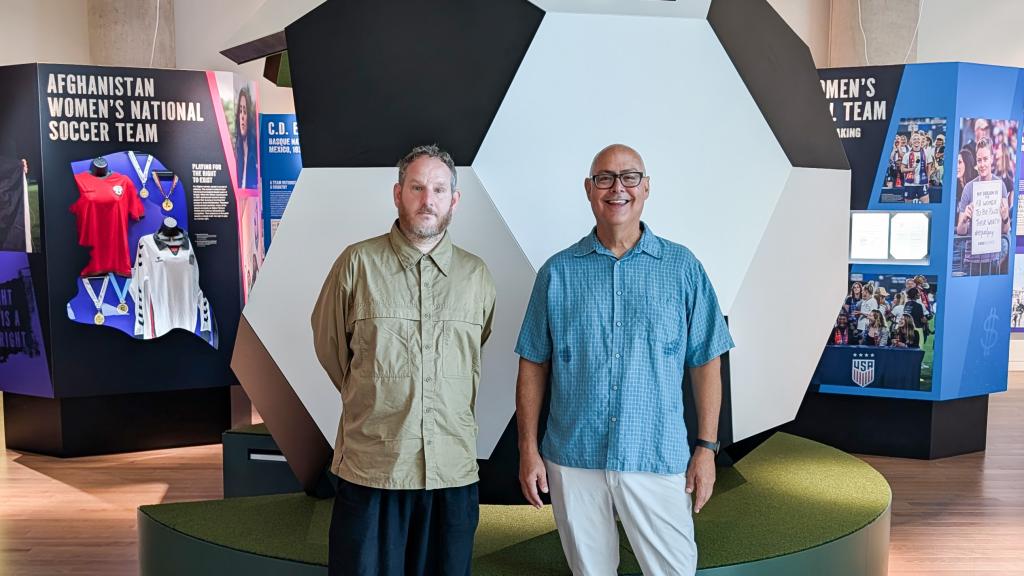
Georgia Tech Professor Kirk Bowman served as the sole academic consultant for "The People's Game: Soccer and Human Rights," an exhibit on display at Atlanta’s National Center for Civil and Human Rights through June 2027.
Bowman is Regents’ Entrepreneur in the Sam Nunn School of International Affairs at Georgia Tech’s Ivan Allen College of Liberal Arts.
Tens of thousands of soccer fans from around the world viewed the exhibit during the World Cup games in Atlanta this summer, and it will continue to serve as a lesson for tens of thousands more about soccer’s power to unify communities and serve as a force for good.
“As a college professor, this is a dream come true,” said Bowman. “It’s probably the single biggest impact my work will ever have.”
Bowman — whose most recent book is The Global Pitch: Why Soccer Matters in Our Changing World, co-authored with Nunn School colleague Alberto Fuentes and Uruguayan sociologist Felipe Arocena — was brought onto the project by Daniel Fuller, director of curation at the museum.
“He quite literally knows everything,” Fuller said of Bowman.
Watch a video of Bowman and Fuller discussing the exhibit
The exhibit tells the story of soccer programs and fans from around the world and how they have interacted for good, from Brazilian soccer players who served as a catalyst for democratic reform in Brazil to fans who rallied around Afghan women soccer players after the Taliban took over and disbanded the club to Atlanta’s own Soccer in the Streets — a non-profit that provides opportunities and mentorship to disadvantaged youth through soccer.
Bowman and Fuller say they hope the exhibit will help change the minds of those who see passionate soccer fans in the news only when it’s associated with violence.
“We like to sensationalize the hooligans and the difficulties and the problems that happen around this game,” Fuller said. “But that’s not the sport I know.”
Bowman — whose work predominantly explores the power of soccer to lift up marginalized communities — agreed, saying violent characters are but a tiny majority of soccer fans.
“Many of the fans are involved in civil society. They’re involved in charity work. They’re supporting refugees and democracy,” he said. “I hope that what people see from this exhibit is not only what has happened, but what is the possibility of things that can happen from the world’s most popular sport.”