
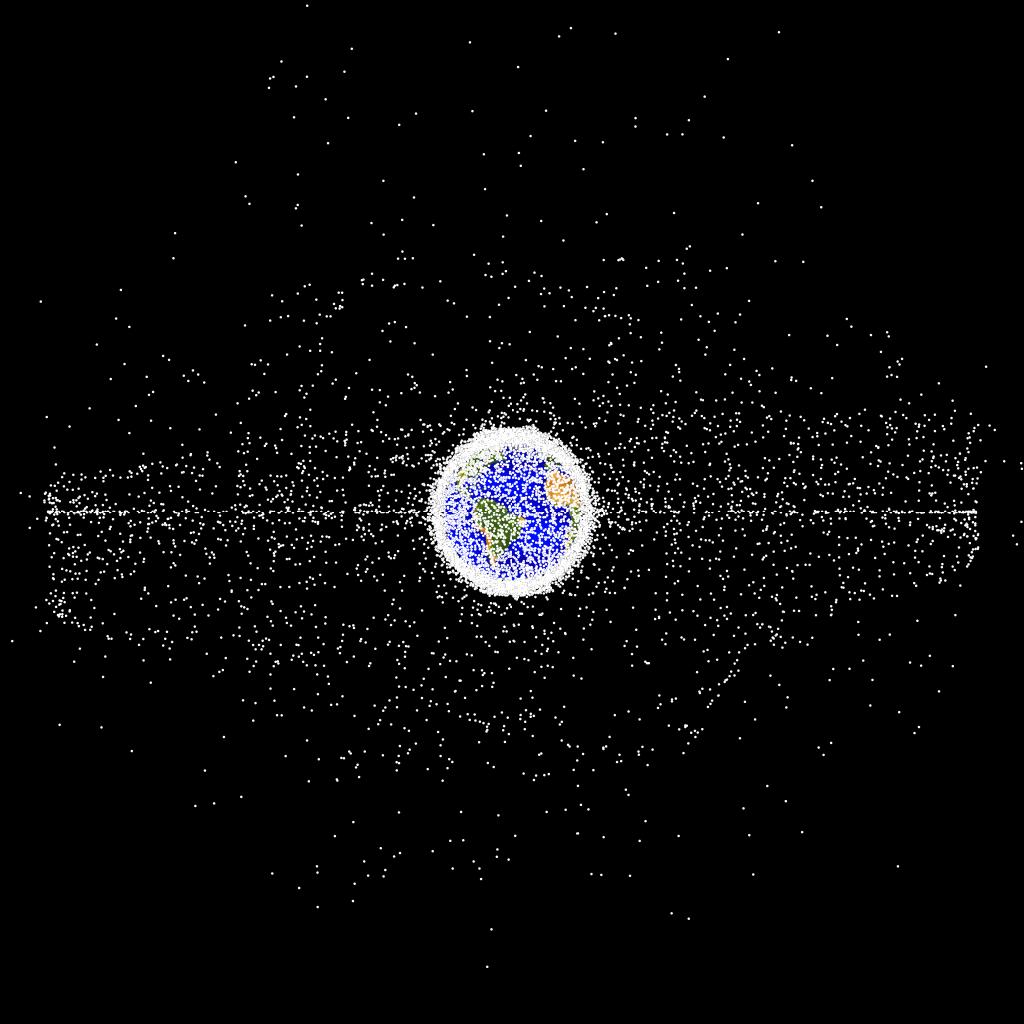
The most immediate challenge of the Third Space Age? Trash.
Low Earth orbit, once the frontier, is now nearly as congested as an Atlanta highway at rush hour, but instead of the risks being cars and fender benders, the threat is an errant paint fleck crashing into a satellite and causing a catastrophic chain reaction.
Associate Professor Mairel Borowitz, who has testified before Congress on these issues, notes that the modern global economy depends on the satellites orbiting earth. An accident could threaten everything from your morning commute directions to the global banking system and emergency response networks.
Borowitz is on loan half-time to the U.S. Department of Commerce to help lead the transition of satellite and debris tracking from the Department of Defense to a civilian agency. This new system, known as the Traffic Management System for Space (TraCSS), represents a pivot toward transparency and coordination to keep space safe. In her 2022 testimony to the House Subcommittee on Space and Aeronautics, she likened it to a "weather model" for space traffic.
“If tornado warnings had to be purchased from the private sector, surely there's lots of people who would buy them; however, the National Weather Service continues to provide the highest quality warnings free of charge,” Borowitz told the committee. “This is because the government has a responsibility to ensure that all people have access to this critical safety information, and the same is true for SSA.”
But managing the traffic requires seeing it in the first place. This is where Assistant Professor Thomas González Roberts’ work in the Engineering Space Policy Lab comes in. He and his students use AI and other tools to characterize satellite behavior, ensuring that policy debates are grounded in facts.
His team focuses on the "attribution problem" — the technical difficulty of proving which actor is responsible for a maneuver or a collision in the vastness of space.
“If we don’t have the technical tools to verify where these objects are and where they’re going, our policy discussions are just shouting into the void,” Roberts said. “And without an understanding of the policy environment — who has the authority to take what actions — well-intentioned technical solutions to coordination challenges in space often fall on deaf ears.”
The team’s interdisciplinary approach even pulls in regional experts such as Assistant Professor R. Lincoln Hines, who has analyzed real-world orbital debris strikes on Chinese spacecraft to argue for improved crisis communication channels, preventing technical accidents from escalating into diplomatic crises.
This article is part of our feature on space policy in the Sam Nunn School of International Affairs in Georgia Tech's Ivan Allen College of Liberal Arts. To view the main story, click the button below.