
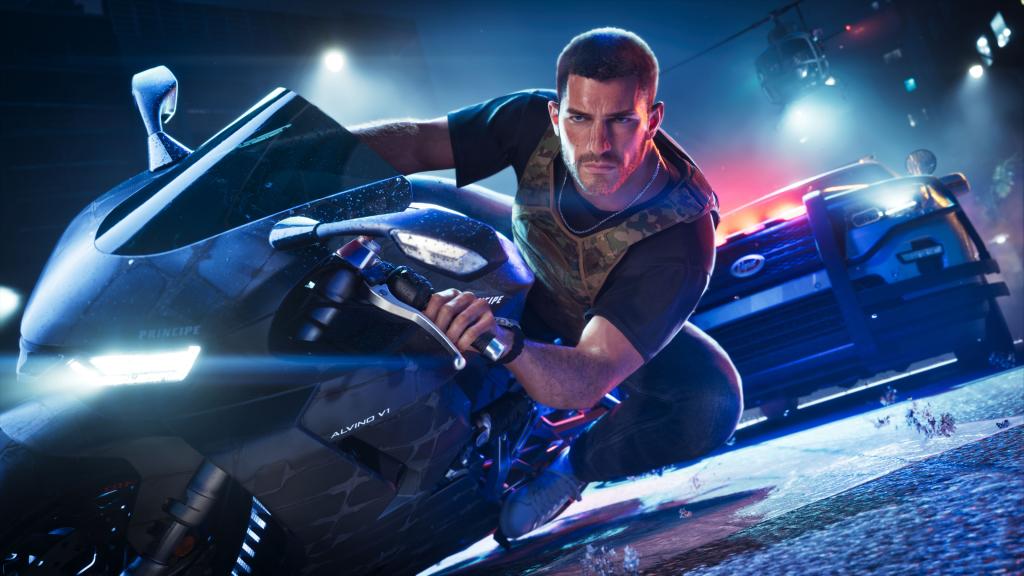
In Grand Theft Auto 6, Rockstar Games’ newest blockbuster video game, players can earn a trophy by kicking over at least 10 pedestrians in a minute, committing three robberies back-to-back, or blowing through a hundred grand in stolen cash. Guns, vehicle modifications, and tattoos, one guide helpfully notes, burn through Benjamins the fastest.
Such awards — which dedicated console gamers will recognize from the distinctive “ding” or “bloop” sound effects assigned by Xbox and PlayStation — are but a few of the 55 achievements that players can earn through playing GTA 6, which has already earned nearly $4 billion in the first few days after its release.
“Of all the things you can say about Rockstar, it’s that they know their player base, they know what they’re going to do,” said Scheiding, an assistant professor in the School of Literature, Media, and Communication, a unit of the Ivan Allen College of Liberal Arts.
“This is a game that’s going to be relevant for probably 15 years.”
And GTA players throughout the franchise’s nearly 30-year history have always embraced the game’s chaotic criminal vibe — taking the game’s already exaggerated lifestyle to the max (and often drawing the ire of critics who argue its violent gameplay encourages anti-social behavior).
Achievements such as “Ten Pin,” a play on words for bowling over pedestrians, recognize that history while making sure players are aware of features they might not otherwise discover, Scheiding said.
“Sometimes trophies like this can be really toxic, encouraging players to go way overboard in ways they may not enjoy or feel coerced to do,” Scheiding said. “But in its purest best form, trophies encourage people to play games in interesting, unique ways.”
How Do Achievements Serve as a Roadmap for Players?

Scheiding recently edited and contributed to a book, Trophy Cases, which examines the theory and the history of video game achievements. In case you’re curious, they date back to at least the 1980s — when Activision encouraged gamers to mail in photographs of high scores. The company would mail back a badge.
Achievements, as they’re known on Xbox and Steam, and trophies, the name for the same concept on PlayStation consoles, are now a routine part of every videogame release on Steam, PlayStation, and Xbox. In fact, developers have been required to include them in Xbox releases since 2005 and PlayStation releases since 2009. Nintendo has trophies in some games but not platform wide.
“Trophies really represent the co-creative nature of video games,” Scheiding said. “Rather than inventing brand-new ways to play, trophies take longstanding gamer traditions like trying to beat a high score, finish faster than anyone else, or explore every corner of a map, and formalize those behaviors into trackable milestones.”
They typically come in four types, according to Scheiding:
- Routine trophies for simply progressing through the game
- Challenge trophies such as GTA 6’s pedestrian-flattening “Ten Pin” or one awarded in Rise of the Ronin for hunting down 50 open-world fugitives
- Dedication trophies, which often require huge time commitments (completing every challenge) and sometime extreme skill, such as earning a top rank in Resident Evil 4
- Random or humorous trophies, such as Evil Dead: The Game’s “Classic Ride” achievement, which rewards players for seeking out and driving the 1973 Oldsmobile Delta 88 driven by Bruce Campbell’s character in the iconic film series
While not all gamers care about trophies and seeking them out isn’t required for gameplay, they do provide a roadmap for players on how the developers want players to engage with the game, Scheiding said. He noted he often follows trophy guides as he works through a new game.
How Do Achievements Help Lock Players Into Platforms?

“They also act as a history of a gamer’s habits and values,” he said. “They show whether someone is focused on the story or maybe someone who is into a specific title or genre.”
And they can serve an economic or brand loyalty purpose, Scheiding notes.
“Players often think, well, I bought a PlayStation back in the day, and now that I’m in that ecosystem, I don’t want to lose all those trophies,” he said.
Count Scheiding, an avid gamer who says he has so far earned 10,033 trophies on his PlayStation console, among that number.
“PlayStation trophies have shaped how I play games and also helped shape how I understand them as a game designer myself,” he said.
And while he’s not a GTA 6 player — “That kind of chaos is not for me,” he said — he respects Rockstar’s juggernaut not only an economic engine for the video game industry, but also an important cultural force whose impact will outlast most movies and novels.
“This is a game that’s going to be relevant for probably 15 years,” he said.
Learn more about Scheiding's video game work in our feature, "Understanding the World Through Video Games."