
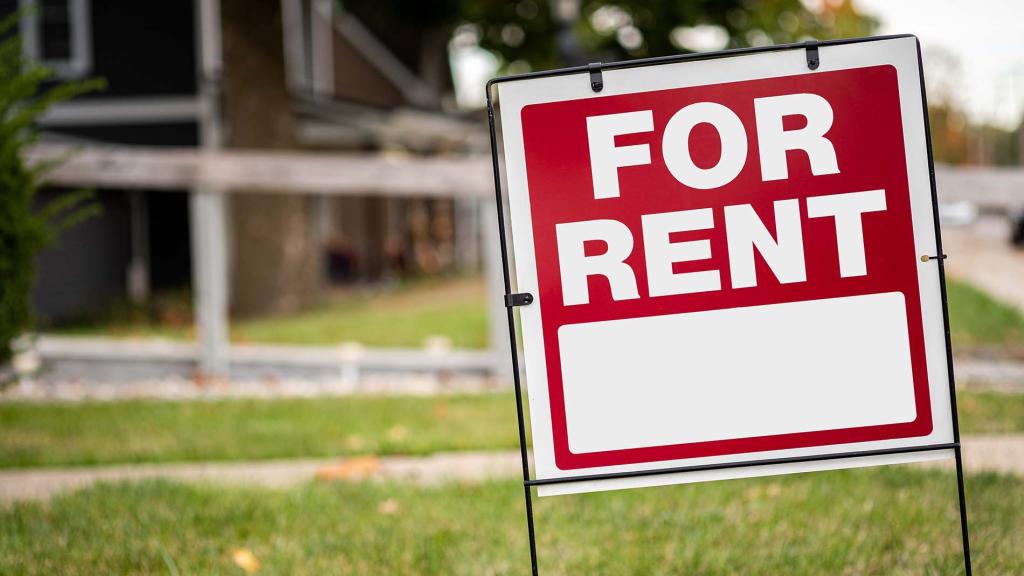
You’ve almost certainly heard about, and maybe experienced, the decline of affordable housing in urban areas. Less well known, however, is a looming crisis in rural rental housing fueled by the expiration of government subsidy contracts that have helped keep rural rental prices down for years.
In a new paper published recently in Housing Policy Debate, researchers including Georgia Tech’s Brian An — whose widely cited research has tracked the role of corporate investors in the urban affordability crisis — warn that as many as 400,000 rural Americans could soon see their rents skyrocket.
That’s because as a big group of subsidized U.S. Department of Agriculture-backed mortgages that required affordable rents will be paid off as soon as 2028, leaving landlords free to increase rents to meet market demand.
The paper also predicts which rental homes are most likely to leave subsidized programs.
“We talk a lot about the urban affordability crisis, and rightly so. But this research reminds us that there are hundreds of thousands of rural Americans, many of them elderly, disabled, and extremely low-income, who now could have to find a way to deal with a housing crisis,” said An, an assistant professor in the Jimmy and Rosalynn Carter School of Public Policy and co-director of the Center for Urban Research, who has dedicated his scholarly career to understanding and improving the housing market for people everywhere.
In addition to this research, An has conducted widely cited work revealing how a sizeable portion of the urban affordability crisis has come about due to investors who have snapped up homes and locked many would-be homeowners out of the market.
The Center serves as a hub for such policy-relevant scholarship, connecting faculty and students to pressing issues of housing equity and community resilience.
While the scale of the problem is relatively small in purely numerical terms, affecting about 1.3% of America’s approximately 29 million rural households, the effects could be devastating for those living in those homes. Rural renters on average make less than urban renters, with more than a quarter paying more than 50% of their income toward often substandard housing, according to the Urban Institute.
The Looming Rural Rental Cliff
At issue are homes with subsidized mortgages issued by the U.S. Department of Agriculture under what’s called its Section 515 program, largely between 1972 and 1995. The loans, some of which have terms of up to 50 years, required owners to charge affordable rents to low-income residents.
About 90% of existing mortgages under the program will be paid off between 2028 and 2045, allowing owners to convert their properties into market-rate units likely to be too pricey for current tenants, whose average annual income is less than $14,000.
Owners could seek additional subsidized funding in exchange for continuing to abide by affordability standards, or they could just decide to continue offering lower rents.
According to the researchers, however, that’s unlikely to happen.
A 2015 study of affordable housing in Florida conducted by the Inter-American Bank and the University of Florida and cited in An’s paper found that a majority of property owners — 56% — opted to convert their properties to market-rate units.
An and his colleagues found that profit will likely also drive owners to leave the Section 515 program. A statistical analysis of factors that might induce owners to walk away from affordability guarantees showed that the profit motive, unsurprisingly, remains a powerful incentive. For-profit owners with no other subsidies and whose properties are self-managed or operated by small-scale management firms are most likely to leave, according to the study.
Policy Paths Forward
That finding points to possible policy solutions to pare back the looming affordability crisis for rural renters, An said.
Among other things, the researchers suggest policymakers could consider changing federal law to better incentivize owners to continue offering affordable housing, make rural housing vouchers more useful, or provide more funding for affordable housing. Lawmakers could also consider giving local housing authorities or owners the right of first refusal to buy properties when they emerge from the Section 515 program.
The Drive Behind the Data

An’s interest in safe, affordable housing isn’t just professional. It emerged, in part, from his own experience as a financially struggling Ph.D. student living with his two children in poorly maintained rental housing.
“The elevator would go out; we sometimes didn’t have hot water. One time, the ceiling in my bathroom collapsed,” said An, who was living in Los Angeles at the time. “But we needed to save on housing so that we would have more to spend on food and transportation.”
That trying experience helped An understand the importance of housing and helped cement his choice to become a scholar dedicated to helping untangle a complicated housing market that increasingly is leaving lower- and middle-income people behind.
“When you have secure housing, you can be more productive, and you can have a healthy environment for raising your kids.”
“Every affordable unit rural communities lose is a tear in the social safety net that's incredibly difficult and expensive to mend later,” An said. “The good news is that this isn't a problem that requires a blind, one-size-fits-all solution.”
“Our data acts like a road map, pointing directly to the properties most at risk,” he said. “This allows policymakers to be surgical and efficient, targeting incentives to where they’ll have the most impact in keeping rural residents in their homes.”
An conducted the study with Andrew Jakabovics of Enterprise Community Partners; Anthony W. Orlando at California State Polytechnic University, Pomona; and Seva Rodnyansky at Occidental College in Los Angeles, California.
Their paper, “Preservation of Affordable Rural Rental Properties by Understanding Owners, Managers, Subsidies, and the Local Market,” was supported with funding from JPMorgan Chase.
It was published on Sept. 5, 2025, in Housing Policy Debate and is available at https://doi.org/10.1080/10511482.2025.2531878.
Learn More About Our Work on Housing Policy
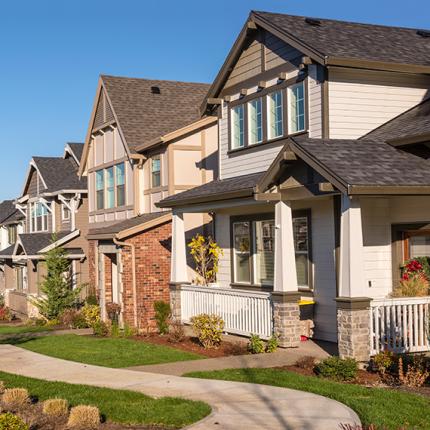
An's research into the impact of corporate homebuyers on home affordability has been widely cited in the media, including serving as the basis for part of an Atlanta Journal-Constitution series examining the spiraling cost of homes.

An also worked with the Brookings Institution to study whether federal housing policy adequately protects renters following natural disasters.

The Jimmy and Rosalynn Carter School of Public Policy and the Center for Urban Research are leading the way in helping understand the important role of housing in the health and well-being of people and communities, in Georgia and beyond.