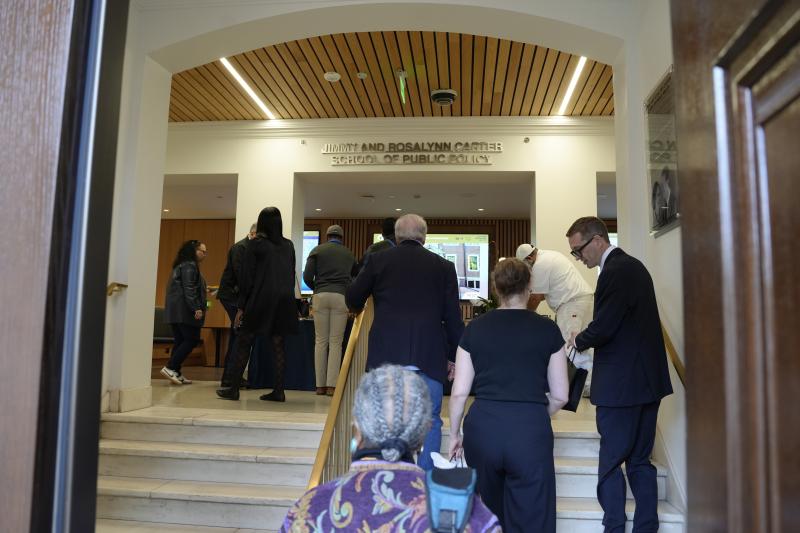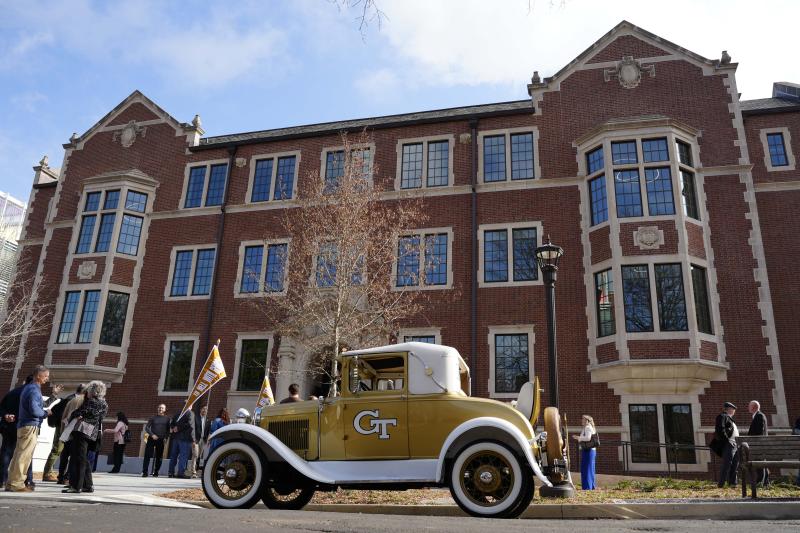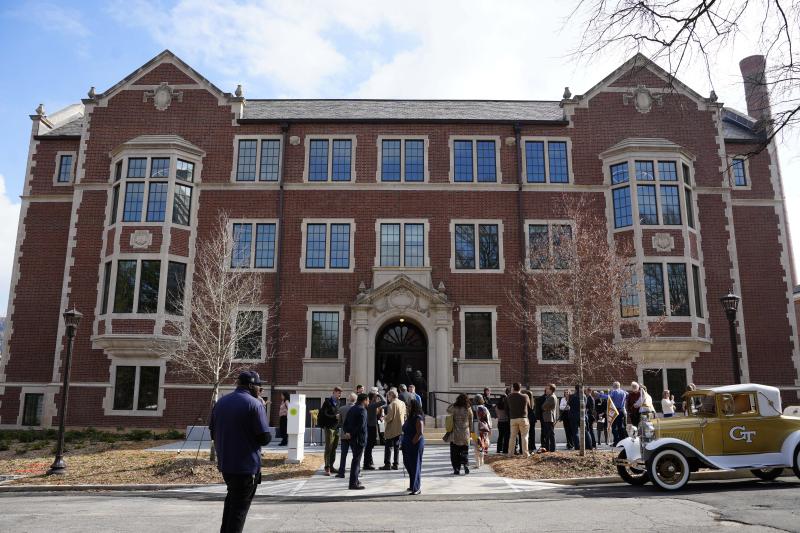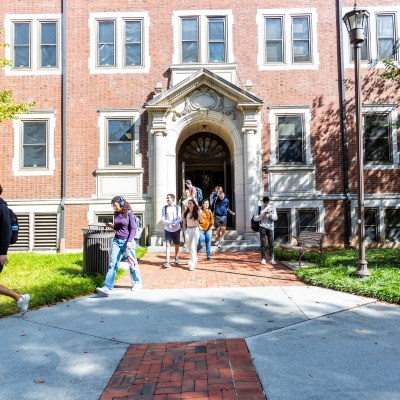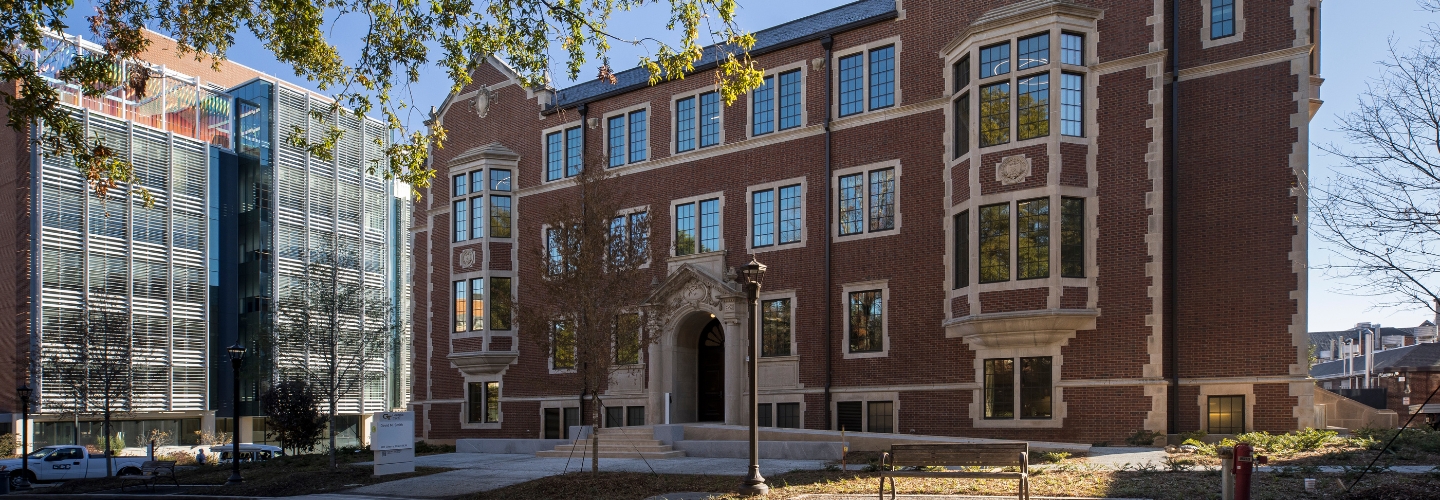
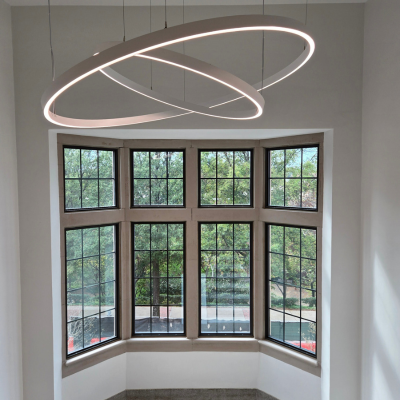
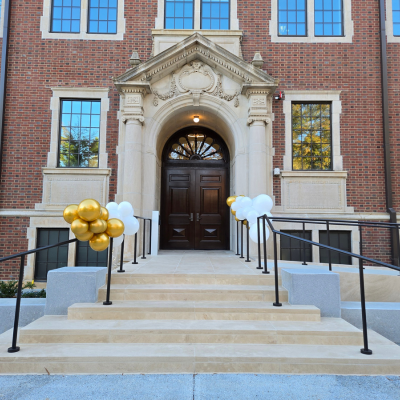
After more than 100 years, the walls of the D.M. Smith Building have undoubtedly witnessed some fascinating lectures, discussions, and arguments. The building, constructed in 1923, is ready to host its next 100 years of engaging teaching and research (starting with Spring 2026) thanks to a $26 million renovation that preserved its historical character while updating infrastructure, accessibility, and sustainability.
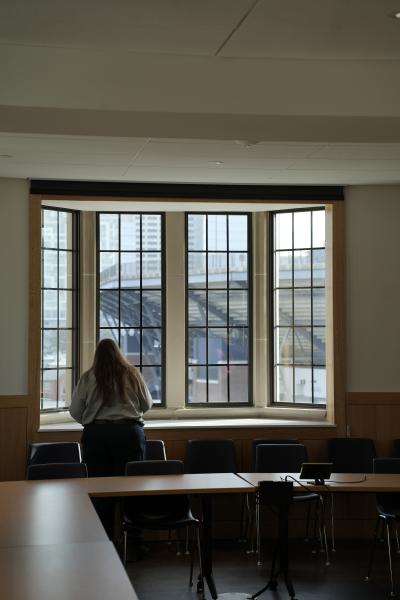
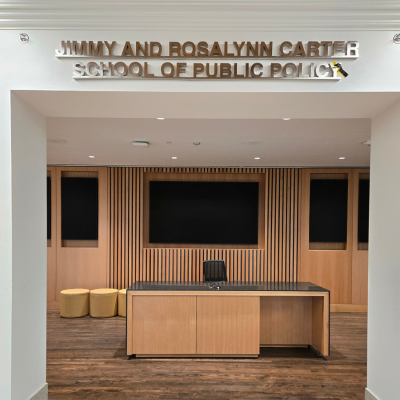
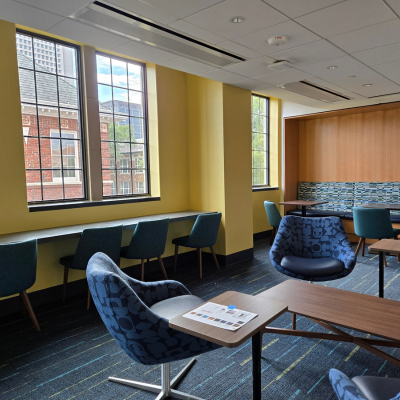
Home to the Jimmy and Rosalynn Carter School of Public Policy, D.M. Smith’s beautiful 38,305 square feet of updated space includes a large lecture hall, six classrooms, five meeting rooms, five student support spaces, and 44 offices. Also new to D.M. Smith: the Marilyn A. Brown and Frank Southworth Policy Innovation Lab, which serves as a state-of-the-art conference, meeting and event space for the Carter School.
The building is expected to be certified as LEED (Leadership in Energy and Environmental Design) Platinum or Gold by the U.S. Green Building Council.
“We are grateful and delighted to be back home, with renovations that align with our values, and reaffirm our commitment to sustainability and innovation,” said Cassidy Sugimoto, Tom and Marie Patton Chair of the Jimmy and Rosalynn Carter School of Public Policy. “We hope the new D.M. Smith can serve as a model for deep energy retrofits of historic structures on campus.”
Renovations included strengthening compliance with the Americans with Disabilities Act of 1990 by creating a permanent wheelchair access feature and adding an elevator. New mechanical, electrical, and plumbing systems were added to improve safety and comfort, as well as the building’s energy efficiency. New virtual lab and hoteling spaces will also allow collaboration with partners across Georgia Tech, the state, and nation.
Construction began in late 2023 and finished up at the end for 2025 after a delay related to the chilled water outage in the summer of 2024. Annum Architects, in association with Houser Walker Architecture, served as the design team for the project. Gay Construction Company completed the construction. In all, more than 450 people worked on the project.
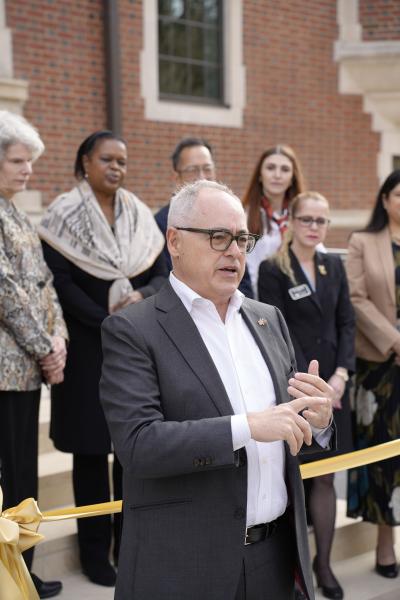
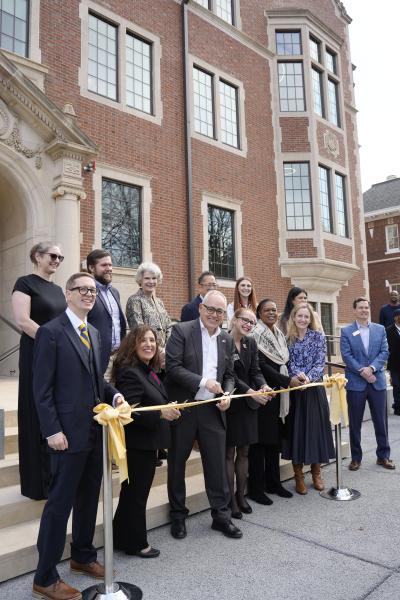
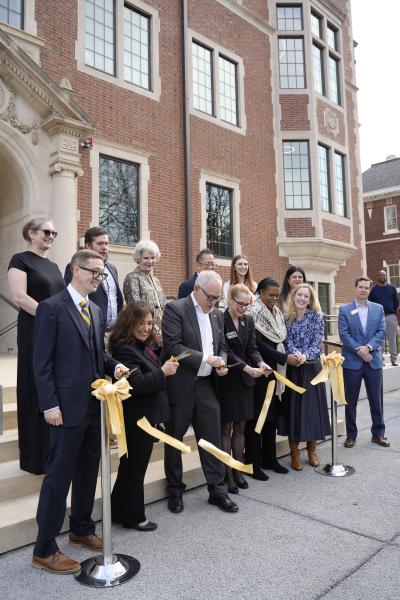
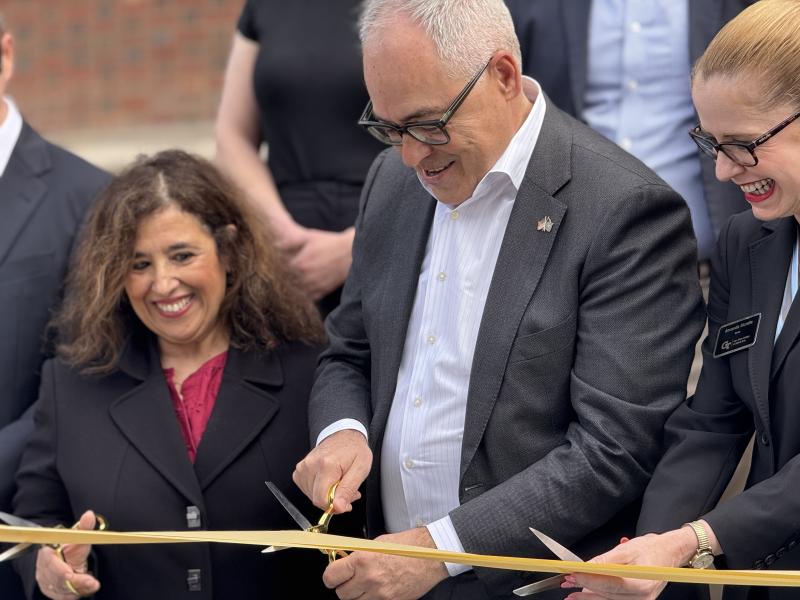
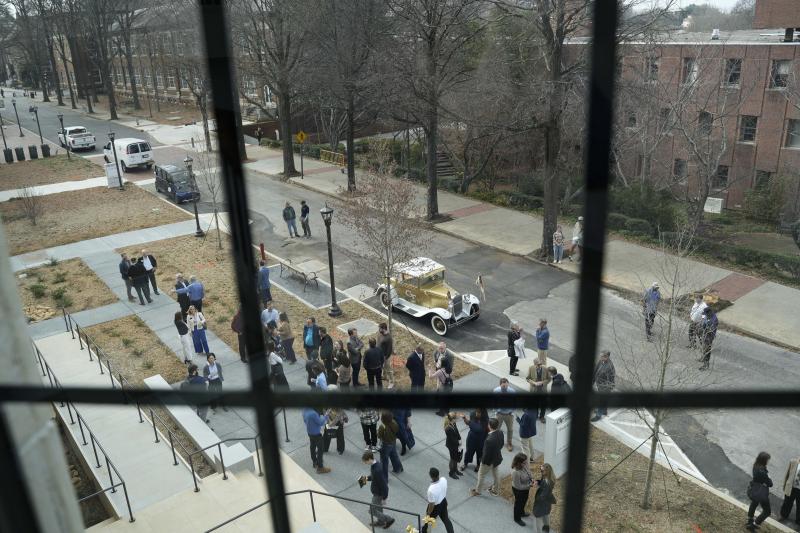
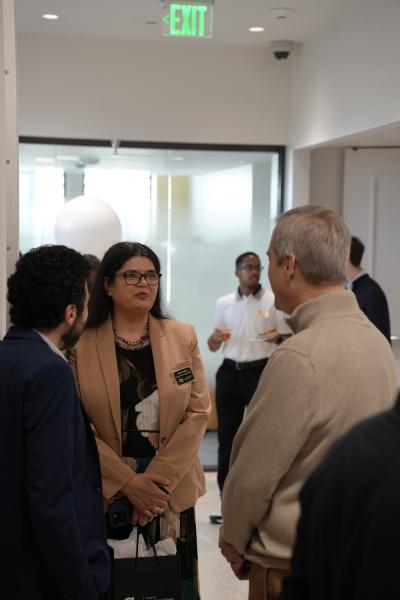
“Kudos to everyone who had something to do with this building, because it’s really great,” Georgia Tech President Ángel Cabrera said during the ribbon cutting event Jan. 7 for the event. “It is in the center of campus, and we needed to have a great example of what the future of this campus can be.”
no
Blurb / Gallery Set
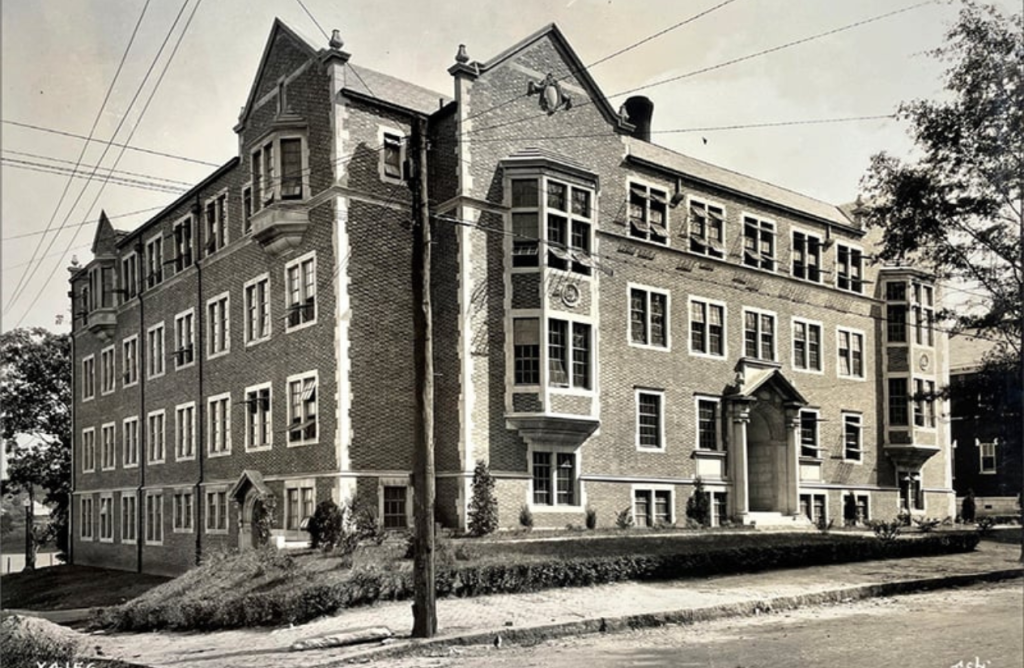
D.M. Smith Building at the time of construction, 1923. Archives and Special Collections, Library, Georgia Institute of Technology.
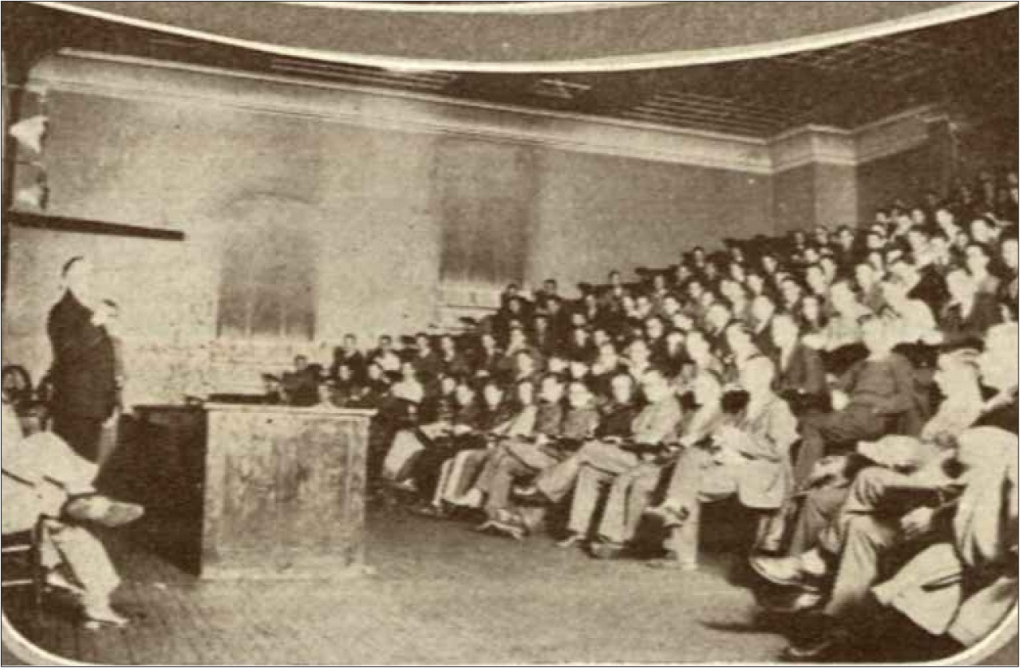
“A lecture in the Physics Building.” 1928 Blueprint, Georgia Tech.
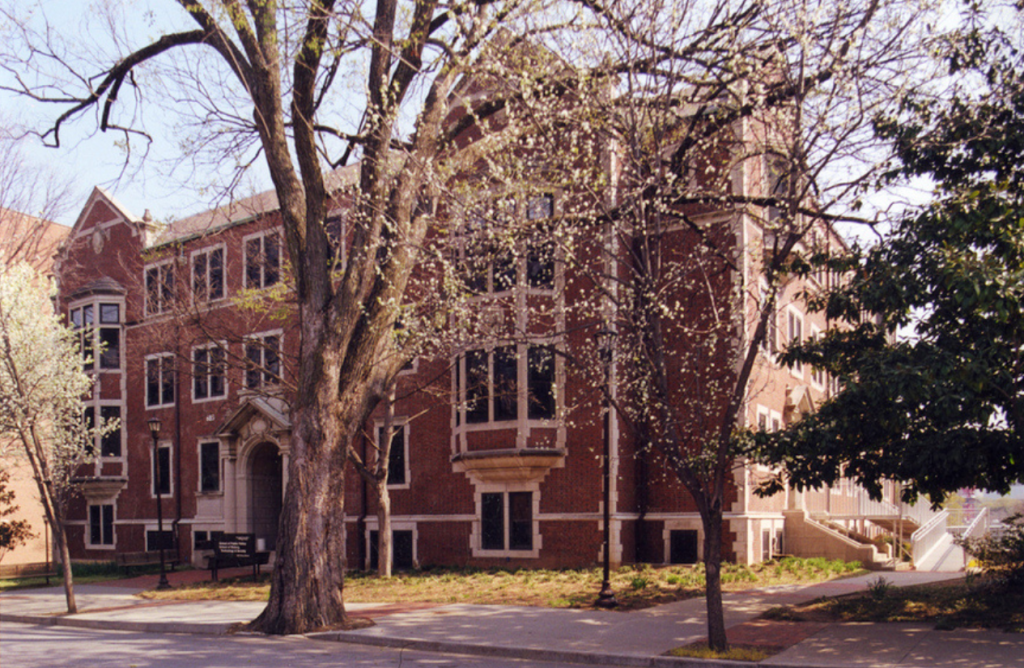
Main (west) facade, April 2000. Archives and Special Collections, Library, Georgia Institute of Technology.
If These Walls Could Talk
The D.M. Smith Building was originally named the Carnegie Physics Building after a donation from the Carnegie Foundation. It was later renamed to honor David Melville Smith, who taught mathematics at Georgia Tech for over four decades.
The building, at 685 Cherry Street, is a part of the Georgia Institute of Technology Historic District listed on the National Register of Historic Places in 1978. It was designed by Robert and Company Architects and Francis Palmer Smith, head of the Georgia Tech Department of Architecture in 1922. It was also Georgia Tech’s first Collegiate Gothic building, in accordance with the Institute’s 1921 master plan.
When the building first opened, Physics used the ground floor for lab space and the first and second floors for instruction, labs, drafting rooms, and a library. Civil Engineering shared part of the second floor with Physics, and Architecture resided on the third floor.
The main lecture hall on the first floor originally included 10 large skylights that could be covered or opened. But when air conditioning was added to the building in 1970, the skylights were covered and a suspended ceiling was installed to accommodate HVAC compressors on the roof.
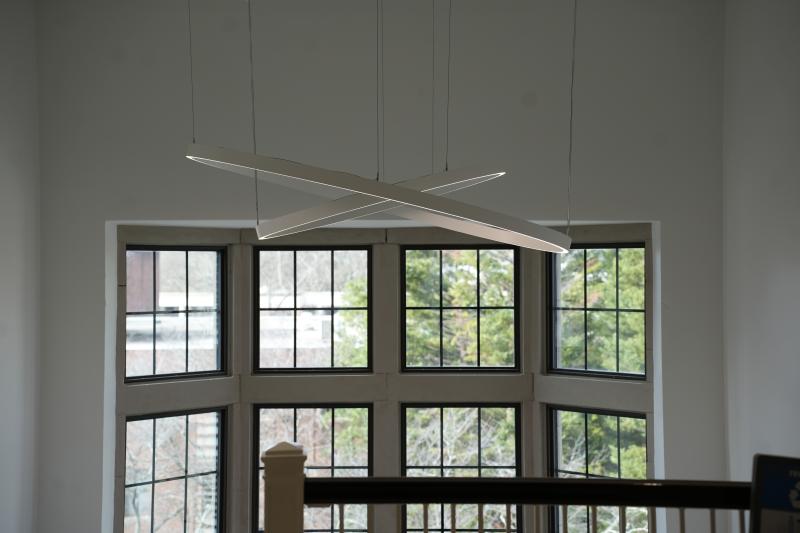
The beautiful skylights were rediscovered during the recent renovation process. While it was cost-prohibitive to reopen them to the roof given other renovations over the past century, the skylights and machinery to operate them are visible on the ceiling and lit to pay homage to the originals.
Recent renovations uncovered more of D.M. Smith’s history, including a set of student signatures from the 1920s discovered on a wall underneath a water fountain. For details on a few of the students who signed the wall more than 100 years ago, check out the Summer 2025 issue of Georgia Tech Alumni Magazine (page 98).
no
Blurb / Gallery Set
Long Trajectories
D.M. Smith won’t just host Public Policy classes and offices — the 75 courses being held in the building for the Spring 2026 semester include other Ivan Allen College of Liberal Arts Schools, College of Computing, College of Design, College of Engineering, College of Sciences, and more.
Generations of Georgia Tech students, faculty, and staff will be shaped by the instruction, thinking, studying, and discussions happening within D.M. Smith’s walls. And many will return over the years having changed roles: from student to professor — or alumnus, industry speaker, or community partner.
Andy McNeil, director of the Carter School’s Law, Science & Technology Program and a Georgia Tech Public Policy alum, says teaching in D.M. Smith in the same rooms where he sat as a student is meaningful and motivating.
“Occupying this building again is a reminder that Georgia Tech is shaped by long trajectories: students become scholars, questions deepen, and familiar places take on new significance. It is a privilege to contribute to the same setting that helped shape me as a student — a space that has now been beautifully restored and improved.”
To inquire about opportunities to name spaces within D.M. Smith, please contact Lauren Kennedy or Laura Gregory at development@iac.gatech.edu.
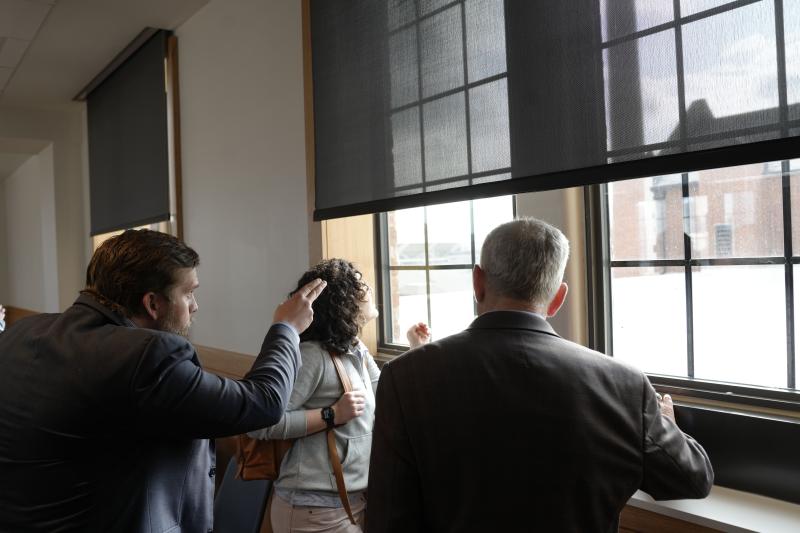
Renovation Celebration in Photos
Renovation Celebration in Photos
Blurb / Gallery Set