
The recovery of the long-lost The Martian Trilogy expands the historical record by demonstrating that Black speculative fiction flourished in the commercial mainstream long before the 1960s.
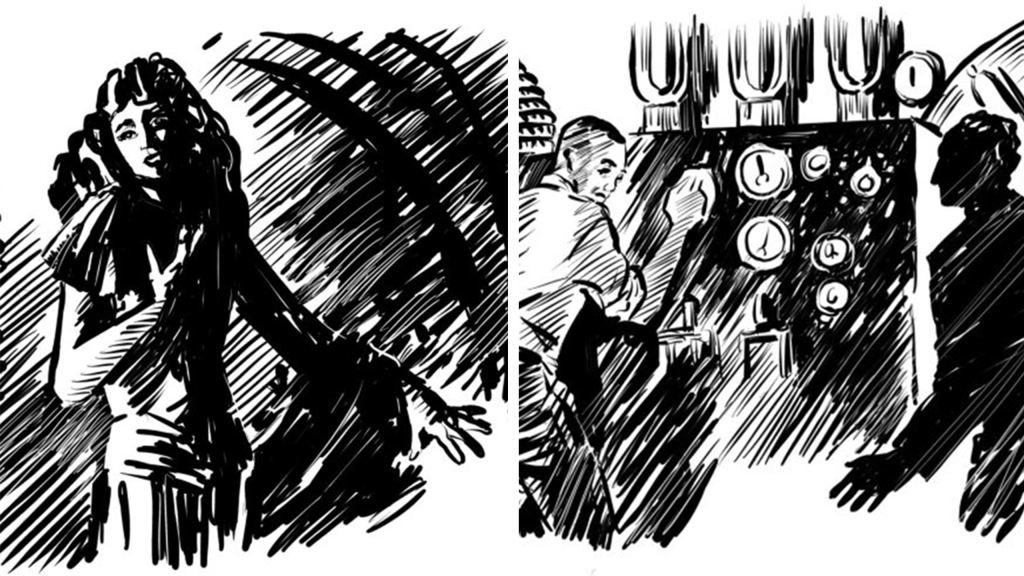
In 1930, a newspaper syndicate published a serialized science fiction story set on Mars. A seminal early space opera written in a style that might have been familiar to contemporary readers of H.G. Wells, “100 Years Hence” may have been seen by more than half a million people. That’s an astonishing number in an era when the audience for the most popular science fiction pulp magazines — and even many early sci-fi novels — was only a fraction of that size.
Still, the story quickly faded into obscurity — the victim of the perishable nature of its medium, a mysterious writer’s voice that suddenly went silent just a few years later, and the earliest curators of a burgeoning genre who, it turns out, were looking elsewhere for their rising stars.
Instead of becoming a cornerstone in a genre that has dominated pop culture for generations, author John P. Moore’s story remained unseen for nearly a century in the archives of the Illustrated Features Section, a weekly cultural supplement bundled with prominent Black newspapers such as the Pittsburgh Courier, Chicago Defender, and the Afro-American.
Historically, we thought science fiction was siloed in ‘pulp’ magazines, but in the Black community, it was integrated into daily life. Moore wasn’t writing for a small niche of hobbyists; he was writing for the grocery store, the barbershop, and the family dinner table.
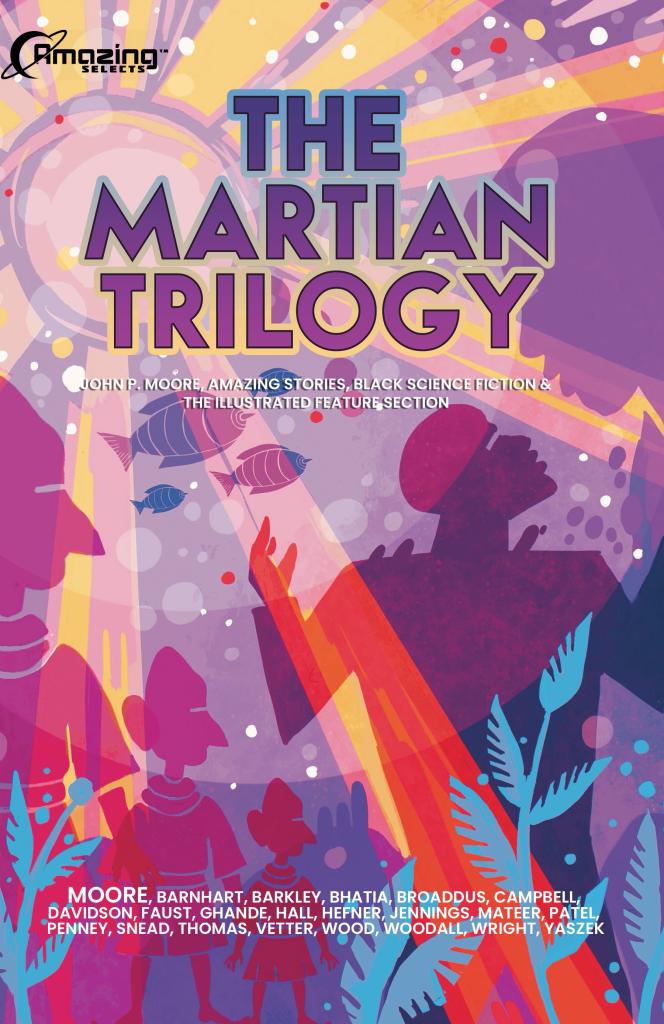
It took a new generation of scholars — faculty and students from Georgia Tech’s Science Fiction Lab located in the School of Literature, Media, and Communication — and a partnership with the legendary genre outlet Amazing Stories to help recover and reintroduce Moore’s writings to contemporary audiences, highlighting that early Black science fiction of that era wasn’t only a response to the political and cultural climate of the day. It was also a smash commercial success.
“The significance of this recovery to the genre lies in the fact that we can no longer say modern Black science fiction arose solely as a response to white science fiction,” said Amazing Stories publisher emeritus Steve Davidson, who has published the stories as a book called The Martian Trilogy.
“It offers the opportunity to say that Black science fiction existed all along in parallel. It was addressing the same issues and, in some cases, had a better circulation than the white publications.”
Reframing Science Fiction History
Historians of science fiction have long known that Black writers were creating speculative fiction as early as the late 1800s, with Martin Delany’s 1859 serialized novel Blake, or Huts of America seen as perhaps the first American example of Black-authored proto-science fiction. W.E.B. Du Bois’ post-apocalyptic “The Comet” from 1920 is often regarded as one of the first true Black science fiction stories.
But those works have traditionally been seen more as commentaries on racial inequality and less as part of the rocket-fueled adventure tradition that dominated the pulp age of science fiction beginning in the late 1920s, and the Golden Age of Science Fiction that followed.
The importance of the Georgia Tech research lies in how it expands traditional histories of the genre by showing that Black authors were writing ray-gun-blasting Martian epics alongside their white counterparts — often for even bigger audiences.

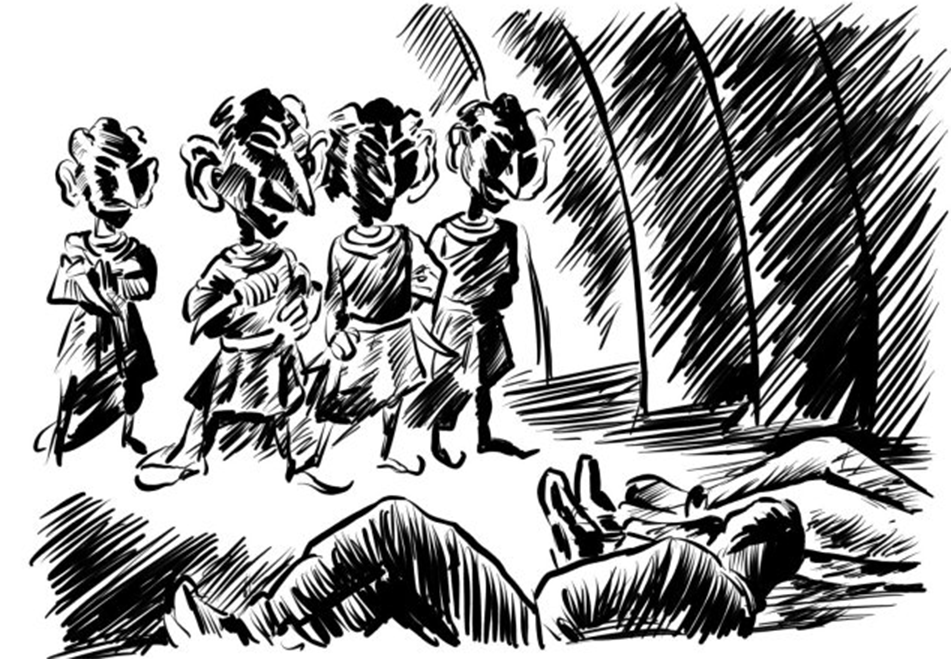
“On the third rush the composite door gave way, and as the young Captain went crashing into the dimly illuminated, cell-like room, his dart gun cracked twice. The powerfully-built little black man silhouetted on the far wall, attired in the green uniform of the recently conquered Elsian kingdom, sprang away and the poisoned darts went cracking into the stone wall."

As it turns out, while Amazing Stories founder Hugo Gernsback and Astounding Stories editor John W. Campbell and others were setting the rules that largely established the genre as a white-dominated space for decades, the research demonstrates that a massive, parallel community of Black speculative fiction writers and readers was already flourishing — almost literally under their noses.
But instead of appearing in those magazines, whose stories often became classics of the genre, pieces like Moore’s burned brightly for a time before disappearing in the “pass-along” culture of the Black press, where a single newspaper might be read by an entire neighborhood before being used to wrap a parcel or light a fire.
“Historically, we thought science fiction was siloed in ‘pulp’ magazines, but in the Black community, it was integrated into daily life,” said Regents’ Professor Lisa Yaszek, whose students helped recover Moore’s story. “Moore wasn’t writing for a small niche of hobbyists; he was writing for the grocery store, the barbershop, and the family dinner table.”
A Tedious, but Rewarding Journey
The work to recover and contextualize Moore’s story began in 2023, when Yaszek’s student researchers in the Science Fiction Lab, housed in Georgia Tech’s School of Literature, Media, and Communication, decided they wanted to work on the recovery of Black speculative fiction.
“They wanted to find out where Black authors were publishing before Samuel R. Delany and Octavia Butler integrated the genre in the 1960s,” Yaszek said.
They ended up with what you might call an exercise in forensic literature. Scouring Georgia Tech’s newly acquired database of African-American newspapers, they found the Illustrated Features Section, a weekly syndicate reaching hundreds of thousands of readers.
The students — Val Barnhart, Tanvi Bhatia, Mitali Gandhe, Max Mateer, Diya Patel, and Killian Vetter — spent months transcribing Moore’s stories from grainy, low-resolution scans of 90-year-old newsprint. They acted as both archaeologists and editors, stitching together serialized installments scattered across different dates and publications.
“This research was a feat,” Patel said. “We spent many hours digging through hundreds of newspapers. Though the process was tedious, it was ultimately worth it in proving not only to the greater sf community that people of color have always been in the science fiction community, but that I have space within it.”
Particularly thanks to Barnhart’s work as the lead student editor on the project, the team made the critical decision to preserve Moore’s unique style, including his rhythmic use of dramatic ellipses, ensuring that the stories retained the authentic voice of a writer who had been lost for nearly a century.

"From somewhere within me came question after question. Who are you? Where? How came you to be bound? .... think .... think .... think!"

“When I first read through the story, I thought the heavy usage of ellipses — sometimes five or six periods — was odd,” Barnhart said. “But as I revisited the text, I realized they were there as dramatic pauses. I ended up convincing Steve to keep them as they were to preserve Moore’s evident homage to orative storytelling.”
“Something as simple as a punctuation oddity brings to mind the West African tradition of the griot, alongside Homer and other epic poets,” Barnhart said. “It’s a pretty complex tapestry of human storytelling.”
‘A Science Fictional Move of Imagining Possible Futures’
For all the value the project has brought to the science fiction community — Davidson is pitching the book for a coveted Hugo Award — it’s brought life-changing value to the students involved as well.
The work offered a degree of technological literacy that students say makes them better engineers and computer scientists.
Consider Killian Vetter, who came to Georgia Tech to study computer science. After his experience with the Science Fiction Lab and The Martian Trilogy, he pivoted to graduate studies in English and science and technology studies at the University of California, Davis.
“This is an essentially science-fictional move of imagining possible futures and choosing to go for the best one,” Vetter said.
“Through my work with Lisa I fell hopelessly in love with English and science and technology studies,” Vetter said. “It seems clear to me that someone with a background in computer science and a love for this kind of literature can really make a difference in looking critically at these technologies and trying to understand through stories how they are changing us and how we can change them for the better.”


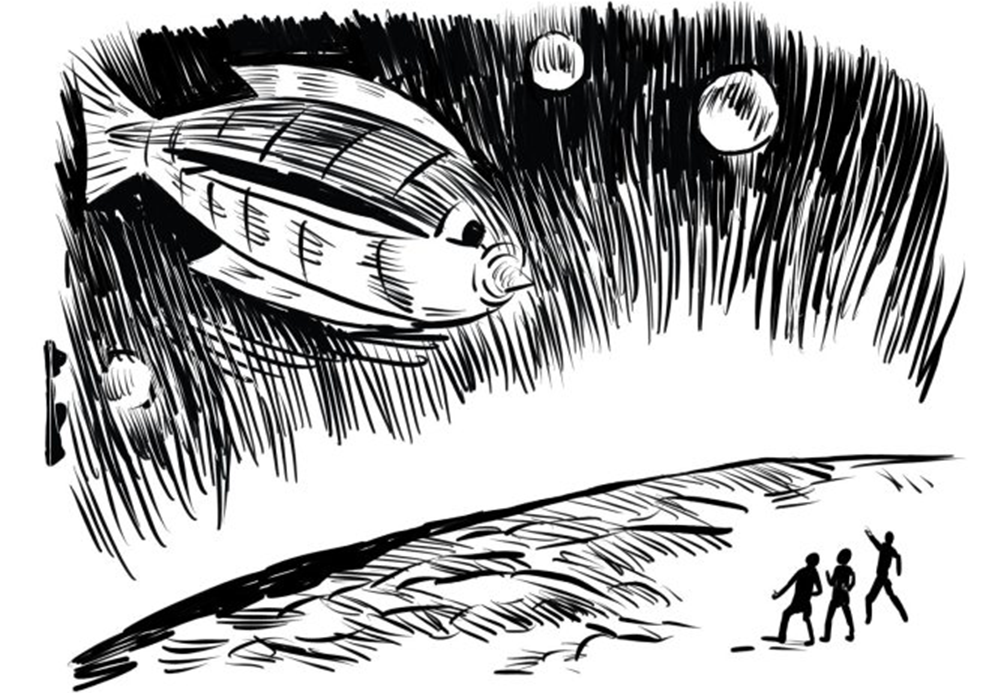
“Eternity after eternity. Time and again I saw Mr. Turner peer into the tube then wiggle frantically for the metal box. Time and again the room trembled as if it was constructed of mud! One of the last things I remembered, was when Mr. Turner peered for the last time into the tube and then rose up on his elbows and motioned us wildly back to our boxes. The word ‘eternity’ doesn’t seem to fill the bill. Certainly it doesn’t do justice to that indeterminable lapse of time before the final crash. It was as if the elements had ripped open! A thing that defies description by man-made words. It did seem ages after that before the lid of my box opened and Mr. Turner, crazy from excitement, his eyes ablaze, whispered that we had made it, that yes, sir, we had landed; somewhere on the planet of Mars― and look!”

Patel, who graduated with a degree in Aerospace Engineering, joined the project after taking a class from Yaszek as part of the Science Fiction Studies minor.
“I wanted to learn more about the impact of people of color on early American sci-fi, and how I could make a difference within it today, as a woman of color myself,” Patel said. “I felt like it was important that a diverse group of people worked on this research, and that I represented a voice you don’t always — or ever — see in sci-fi conversations.”
For this group of students, recovering The Martian Trilogy was an act of reclamation — proof that the future has always belonged to everyone, even if the “official” history books sometimes forgot to mention it.
“Dreaming of the future is not new, and it is not originally white,” Barnhart said. “This work shows such visionaries have always been here.”

Interested in Research Like This?
If you're interested in understanding how science fiction can make you a better engineer, scientist, or citizen, consider the Minor in Science Fiction Studies. Students who pursue the Science Fiction Studies minor will develop the analytic skills and creative mindsets that are crucial for graduate school and for advancements in careers ranging from education to engineering.