
When Bram Stoker published Dracula in 1897, its now-legendary vampire was hardly a novelty on the gothic fiction scene. Indeed, fetid and fanged nobility were stalking the pages of short stories, penny dreadfuls, and novels decades before Stoker put pen to paper.
But while the Count’s contemporaries quickly faded from popular memory, he is still very much undead and well — as are his distant modern relatives.
New research from Georgia Tech’s Carol Senf, an expert on gothic fiction and vampires in literature and film, explores how Stoker’s Count Dracula evolved across films in the twentieth century — and why he continues to enjoy such an unnaturally long life.
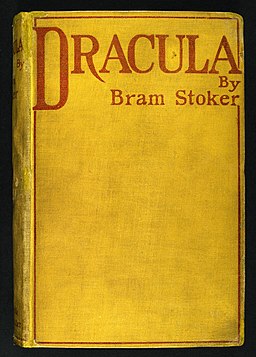

“Dracula endures as an iconic story because it can be endlessly retold to express the deepest fears and desires of the culture in which it is produced,” says Senf, who is a professor in the School of Literature, Media, and Communication.
“Scholar Nina Auerbach says that ‘every age embraces the vampire it needs, and gets the vampire it deserves,’” Senf adds.
In other words, vampire films reveal what we find both seductive and scary. But they also bring viewers face to face with dark truths about our era and ourselves.
And as a catalog of things we find both tempting and terrifying, Senf says, “Dracula has it all.”
“Stoker’s novel captured everything people were deeply ambivalent about in late nineteenth-century Britain: invasion and colonialism, sexuality, disease, mental illness, medicine, technology, wealth and entitlement, salvation and damnation, superstition and folklore, and women's increasing demands for equality in law, politics, and education,” says Senf.
“Our perspectives have changed somewhat, but many of these themes are still very much alive today. In many ways, the novel is about a struggle to determine what relationship the past should have to the present."
Senf’s research traces how Dracula’s character evolves to become increasingly human in film over the course of the twentieth century. She notes, however, that films released in the last two years suggest there may be an abrupt reversal of the trend.
Why the change? Senf has the answer.
“Dark times call for dark vampires.”
Dracula Through the Twentieth Century: A More Human Monster
Over nearly a century of film, Senf says, Dracula has evolved into an undead vampire with recognizably mortal motivations and sometimes, a human backstory.
“He is occasionally seductive and desirable, and he’s increasingly sympathetic, more sinned-against than sinning.”
But as Senf points out, these changes don’t necessarily make Dracula a less disturbing character — in fact, quite the opposite.
“Dracula’s increasing humanity reveals that he is more like us than we like to admit. It’s no wonder we don’t see his face in mirrors; we only see our own.”
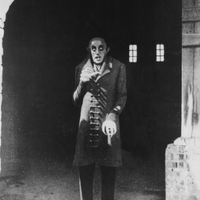
'Nosferatu' (1922)
When Nosferatu: A Symphony of Horror, a silent film directed by F.W. Murnau, came out in 1922, World War I and the influenza pandemic of 1918 had brought disease and rats to the forefront of cultural fears. Naturally, Senf says, Nosferatu arrives accompanied by hordes of rats and resembles a rat himself.
“Murnau’s vampire is not an attractive seducer,” says Senf. “The heroine visibly recoils in horror when he approaches her bedside.”
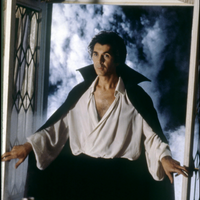
'Dracula' (1979)
According to Senf, the 1979 film Dracula, directed by John Badham, depicts the Count not as a threat to be feared, but as a suitor from an older, more romantic world who offers the heroine a “more vividly realized life” than her middle-class husband.
“In the midst of a cultural moment in which feminists argued that women should be free to choose, her desire to share a passionate existence with Dracula makes sense.”
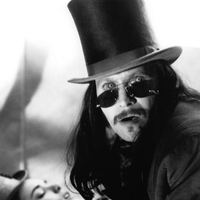
'Bram Stoker's Dracula' (1992)
Francis Ford Coppola’s Bram Stoker’s Dracula, Senf says, depicts the vampire more sympathetically, as a once-human creature battered by fate. The heroine, Mina, reminds him of his long-lost love from the days when he was human.
“In the vampire’s final moments, Mina embraces her Prince Vlad before he finally disappears into dust,” says Senf. “It’s a remarkably human moment that expresses Dracula’s core humanity.”
Dracula in the 2020s: The Monster Returns?
Like all good monster stories, Dracula’s evolution is ongoing and continues to respond to the fears and desires of the twenty-first century.
Two film adaptations of Stoker’s novel have been released in the last two years: The Last Voyage of the Demeter (2023), which follows the Count’s journey from Bulgaria to London, and Nosferatu (2024), inspired by the 1922 film of the same name.
'The Last Voyage of the Demeter' (2023)
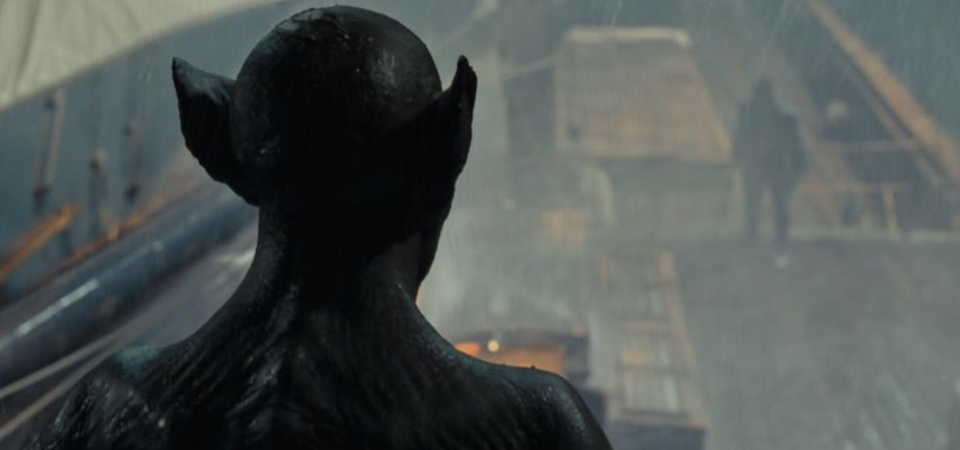
“In Last Voyage, Dracula has no humanity,” says Senf. “There is nothing seductive or appealing about him. He is cunning, violent, and ruthless — little more than a sentient appetite.”
'Nosferatu' (2024)
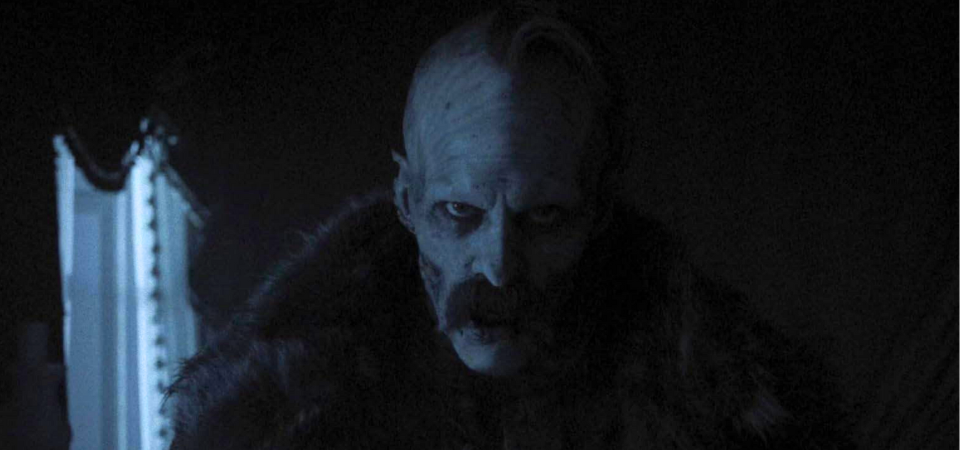
Nosferatu (2024), directed by Robert Eggers, also marks a return to a more monstrous, less human vampire. And while the vampire has a predatory, seductive hold on the heroine, Senf notes he is a repulsive figure to every other character in the film, as well as the audience.
Senf says these two films are a departure from the increasingly human depictions of Dracula. In Last Voyage and Nosferatu, the Count returns to his former status as a brutal, evil force that the humans in the story must face down.
Later this year will see the release of the French film Dracula: A Love Tale, directed by Luc Besson — and in 2026, Francis Ford Coppola will be returning to the conversation with Dracula, starring Keanu Reeves.
What will these films bring? Will we see the return of Dracula the seducer, as the title of the French film suggests? Senf isn’t sure.
“We’ll have to see what kind of Dracula this era deserves.”
'Sinners' (2025)
If we’re talking vampires in the 2020s, we can’t skip Ryan Coogler’s Sinners (2025). The film’s box office success places it in an elite group of high-grossing original horror movies — including Jordan Peele’s Oscar-winning Get Out (2017) — and it may be a contender for the 2025 Academy Awards.
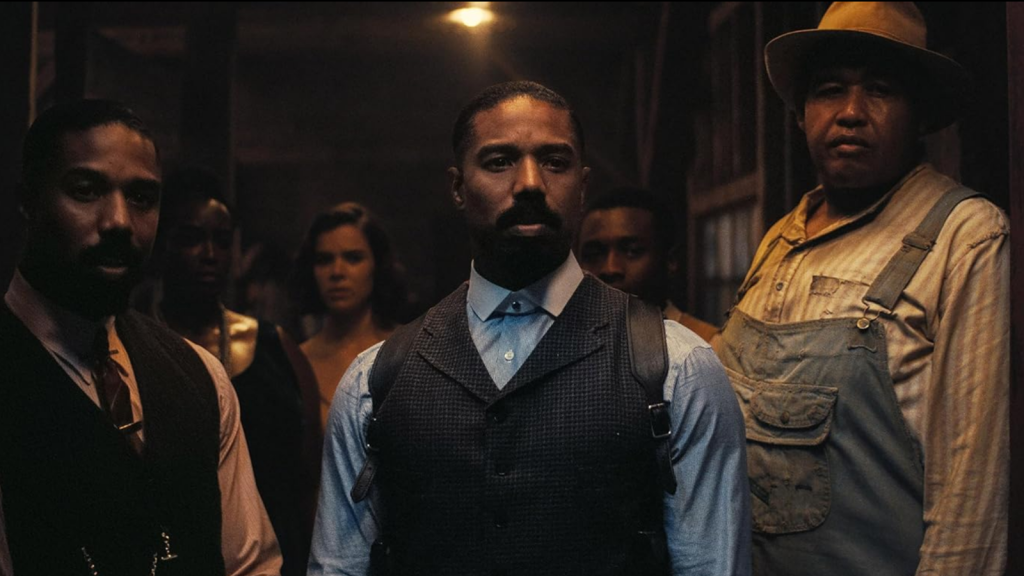
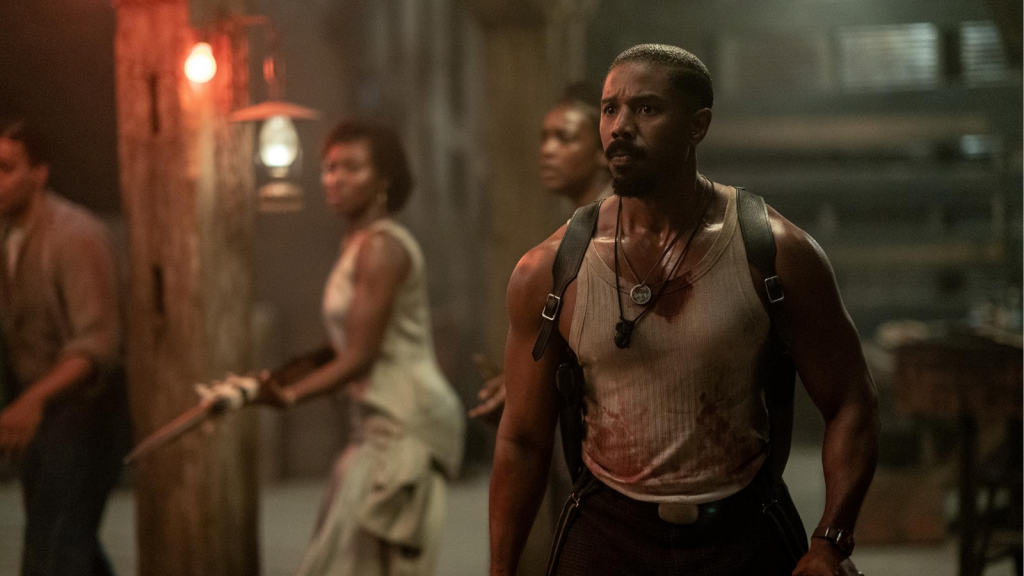
Sinners, set in a Black community in Mississippi in 1932, is the story of twin brothers Smoke and Stack, who are bootleggers, and their cousin, Sammie. The twins return home to Mississippi from Chicago with rolls of cash and purchase an old sawmill (from the local Klan leader, as it happens). Their plan is to turn the space into a blues joint, with Sammie — the local preacher’s son and a talented blues player — as its main attraction.
The “juke joint” is supposed to be a safe space for the Black community and their friends, but the first night it gets into full swing, an Irish vampire appears at the door, accompanied by two newly minted friends, asking to be let in.
Associate Professor Susana Morris, a scholar of Black feminism, Black digital media, and Afrofuturism, is not surprised by the film’s success.
“If Dracula is about the fear of foreign contagion, Sinners is about Black communities, about the anxiety of what it means to be a Black person in the larger social system,” says Morris.
Morris adds that the film’s title reflects its focus on the tension between the sacred and the secular.
“Who is really a sinner?” asks Morris. “Is it the brothers — the bootleggers? Is it Sammie, because he plays the blues instead of church music? Is it the Klansmen? The vampires?”
While vampires drive the plot, Morris says, Sinners is really Sammie’s story — the struggles, dreams, and anxieties of a young Black man growing up in the U.S. South in the 1930s.

“Ryan Coogler is known for films that really think through Black manhood and Black masculinity — films that really respect how complex the interior lives of Black men are,” says Morris.
“If you’re Sammie, do you follow your father? Do you follow the bootleggers and play the blues? Or do you do your own thing? And ultimately, he chooses his own path.”