Starting a Ph.D. program isn’t easy. It's even more difficult when you undergo a kidney transplant in your first year.
But Blaire Bosley, graduating this fall with a Ph.D. in Digital Media from the School of Literature, Media, and Communication, turned her experience into an opportunity to help others. For her final project in the program, she built an interactive digital experience to help people diagnosed with chronic kidney disease navigate the life-altering transplant process and find community.
“My professors gave me so much support and allowed me to pivot the outcome of the projects to be very reflective about my experience getting a kidney transplant and the resources that I saw lacking in the field,” Bosley said. “I’m grateful that I was able to flip the assignment expectations to fit what I was really thinking about at the time.”
Digital Media and Medical Applications
Broadly, Bosley studies the use of immersive reality applications in historical, cultural, and ethical settings. She has helped create a virtual exhibit for the David J. Sencer CDC Museum at the Centers for Disease Control and Prevention and worked on a Georgia Tech project using virtual reality to map images over blind spots for people experiencing a particular type of vision loss.
“My transplant definitely pushed me to think more critically about the world and how I'm taking up space and the ways that I'm advocating for others,” Bosley said. “It also shifted my perspective to become more aware of the challenges, especially in the medical field.”

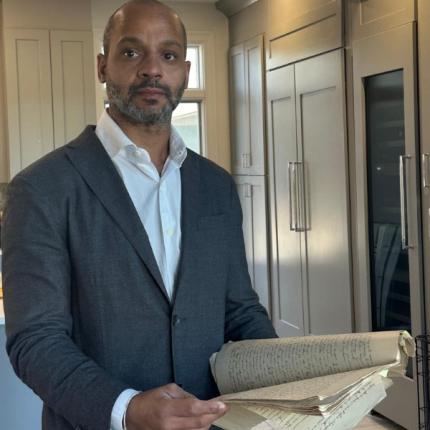
Blaire Bosley is graduating this week with a Ph.D. in Digital Media.
Starting Conversations
For her final project, Bosley worked with the community of transplant patients in her support group in Georgia. They discussed their transplant experiences and the hiccups and nuances they faced along the way. Then, Bosley built an immersive digital experience designed around common themes from the conversations.
“My goal is to make an accessible resource for people who are just starting the journey, to help them think about the daily ways that they have to care for themselves with the transplant,” Bosley explained. (In this case, the digital nature is a key aspect of that accessibility — kidney transplant patients are immunocompromised, so online spaces can be safer for them than physical ones.)
“Ultimately, it's a difficult and life-changing decision, so having a more open conversation and making a space where people can ask questions of others who have gone through the same process — rather than just medical staff — is super beneficial,” Bosley continued. “My hope is that this tool can create conversations specifically amongst folks who are just starting the process.”
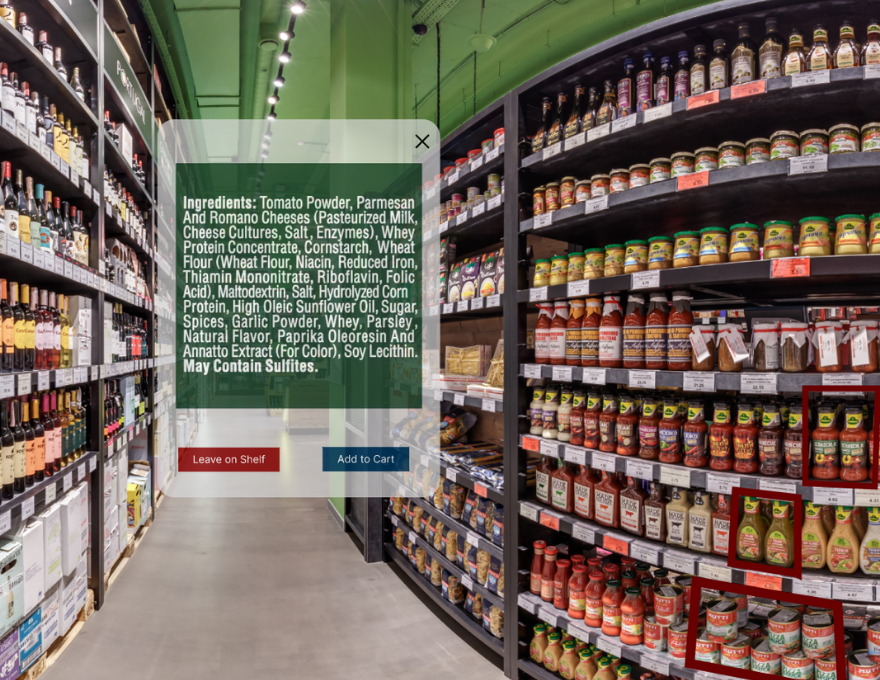
A digital grocery store in Bosley's final project, where people shop for a kidney transplant patient with dietary restrictions.
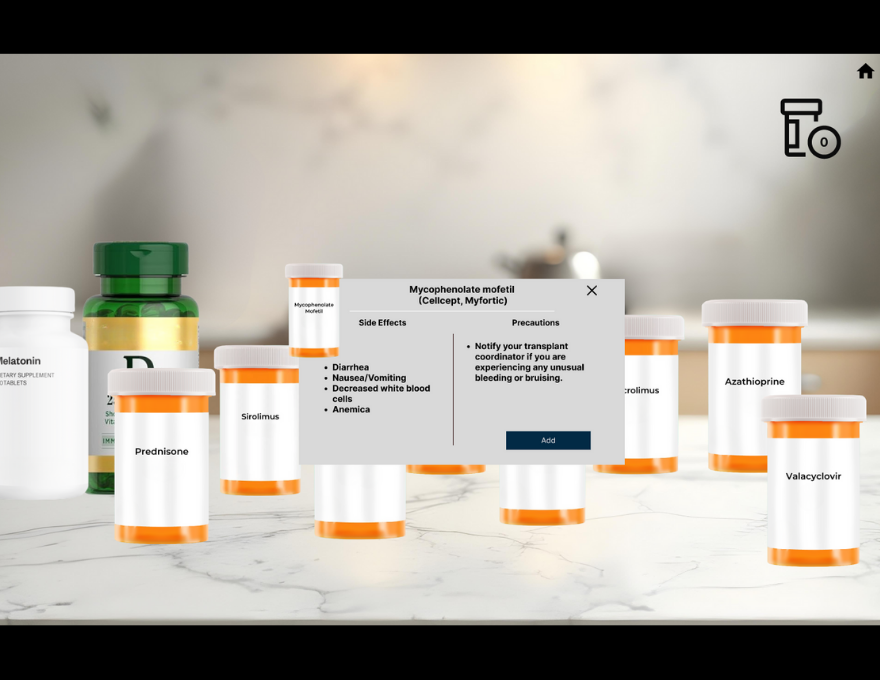
Another interaction in Bosley's final project allows people to explore medication side effects.
How It Works
On Bosley’s website, people explore a house with rooms dedicated to the various issues that might arise during the transplant experience.
For example, patients must adhere to dietary restrictions, so one interaction features a grocery store where they can click on products and learn how different ingredients can affect their health. Another interaction lets users explore common medications with a spotlight on their side effects — including intrusive issues such as memory loss and hallucinations — often get glossed over in medical spaces.
Navigating a New Future, Together
Eventually, Bosley hopes to partner with national kidney transplant organizations to offer the tool to people in Georgia and around the country who have been diagnosed with chronic kidney disease. By facilitating community and conversation, Bosley hopes to help patients face what can feel like a very daunting future together.
“It’s hard to have those conversations, but all of my collaborators said the same thing: we have all these challenges, but we're not going to trade it for our transplant,” Bosley said. “Because having the transplant and a second chance at life is so much more meaningful than all of the barriers we face.”