Without the Master’s in Applied Languages and Intercultural Studies (M.S. ALIS) in Georgia Tech’s School of Modern Languages, Stephan Beaulieu might never have read his great-grandfather’s work.
The handwritten notebooks, passed down through generations of his family, contain poetry, recipes, prayers, and even a short book, all written in French in Haiti nearly 100 years ago. But the crumbling pages are delicate, and the old French terms and cursive handwriting are difficult to read.
So, for his capstone project, Beaulieu is transcribing the book and hopes to eventually publish it.
“I had it there in my room at my house, and I never really went through it until I started the ALIS program,” said Beaulieu, who is graduating this fall. “Then we talked about the final project, and it clicked. I was like, ‘I can do this.’ So I opened it, and I started reading.”
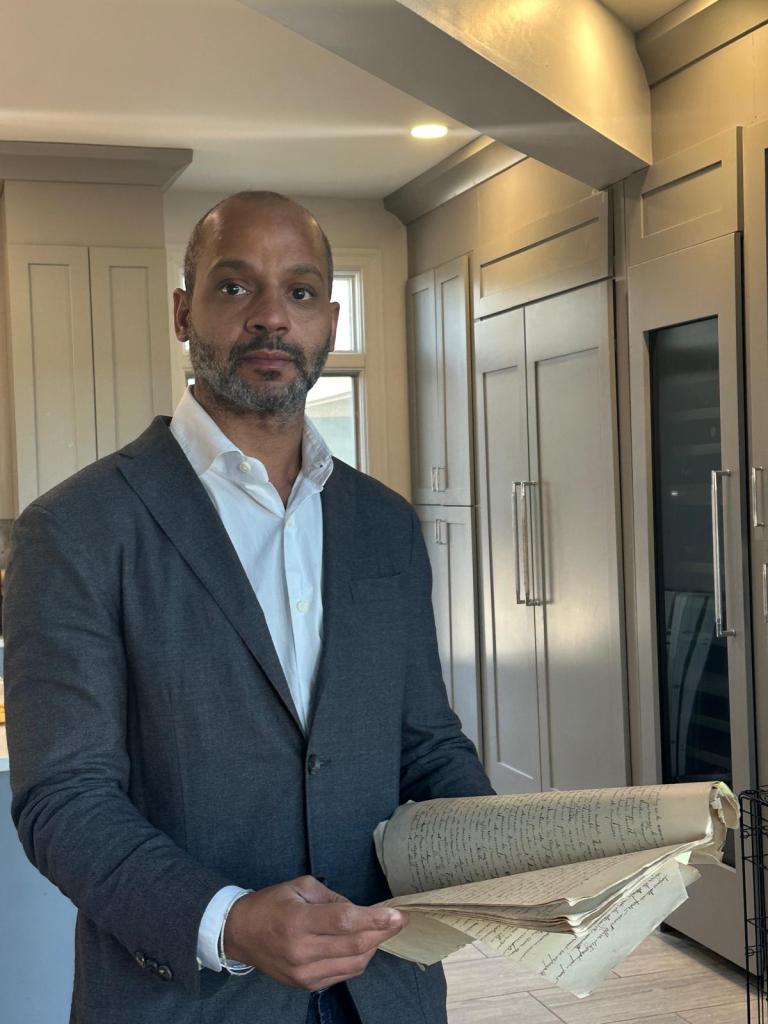
Beaulieu with his great-grandfather's journal. He is transcribing a portion of it for his final project in the M.S. ALIS degree.
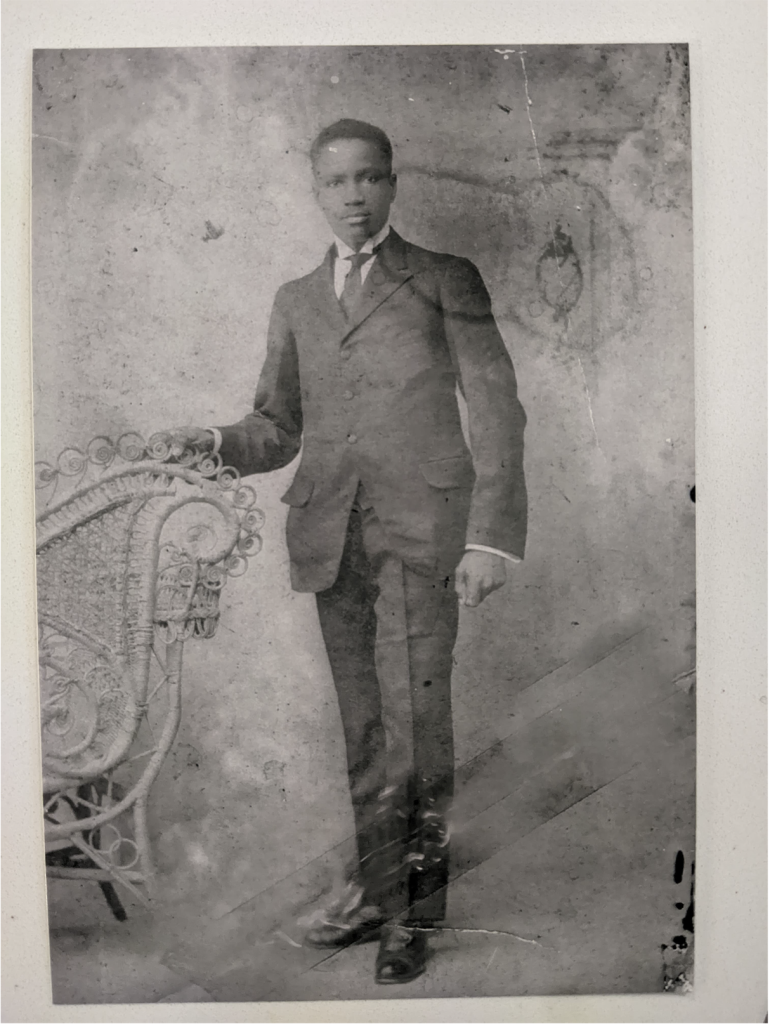
Beaulieu's great-grandfather, Abel Labossière.
Pursuing Something New
Although he speaks three languages, Beaulieu’s career has been in finance, with the last eight years at Georgia Tech. But when he met Stéphanie Boulard, the director of the French program in the School of Modern Languages, and learned about the M.S. ALIS degree, he decided to pursue something new.
The portion of his great-grandfather’s journals that Beaulieu is transcribing is a 14-chapter book called Un Dossier de Femme, or The Woman’s Files. It’s a work of fiction, but it describes real elections Beaulieu’s great-grandfather, Abel Labossière, lived through (he was a lawyer and judge), as well as southern Haiti’s coastal landscape (Labossière was also an amateur geologist).
As part of the project, Beaulieu also added a preface about Labossière’s life and found old photos and newspaper clippings to include in the book.
“It’s a very fascinating story,” Beaulieu said. “It gives you a lot of national pride.”
A Passion for Protecting Haitian Literature
Throughout his time in the ALIS program, Beaulieu has become passionate about protecting the literature and legacy of his home country. Haiti is embroiled in a severe crisis that puts its art and history at risk. In 2024, for example, the National Library of Haiti in Port-au-Prince was ransacked by armed groups.
With this project, Beaulieu hopes he can help protect a small piece of national history for future generations.
“Because of the way that Haiti is, it's very hard and very rare to find old pieces of literature or vintage items. You can't really put a price on them, they’re like a treasure,” Beaulieu said. “I think it's very important for the future generations to know and to value this type of document.”