Past studies suggest that Americans prefer disaster relief to disaster prevention — even though prevention is cheaper and more effective.
However, a new paper from Georgia Tech’s Jimmy and Rosalynn Carter School of Public Policy contradicts those findings.
Nicholas Short, an assistant professor in the Carter School, and co-authors Martin Gilens and Tali Mendelberg report that most Americans — no matter their political party — actually support disaster prevention policies and will vote for candidates who pursue them.
These findings are important as natural disasters become more frequent and severe. Recent reductions in federal funding for disaster relief and prevention programs, such as those administered by the Federal Emergency Management Agency (FEMA), make state and local governments more responsible for covering the costs. This insight can help them make the most effective financial decisions.
“Spending on disaster prevention is arguably more important than it has ever been, so understanding whether there is resistance from the public is extremely important," Short said.
“Our paper suggests, in contrast with what prior work has shown, that there are very deep reservoirs of support for spending on disaster prevention and for prioritizing prevention over relief.”
Disaster Prevention Has Broad Bipartisan Support
The U.S. Chamber of Commerce reports that every dollar invested in disaster preparation saves $13 in economic costs, damages, and cleanup. But Short hypothesizes that people support disaster prevention not because they are familiar with the numbers but because the appeal is somewhat innate.
“We grow up learning about and hearing idioms like ‘an ounce of prevention is worth a pound of cure,” he said.
"While we would like voters to be familiar with the data on spending efficiencies, they don't need this data to decide if prevention is worthwhile; they can extrapolate and draw inferences to get to the right policy based on their own lived experience. This is especially true when the costs are not purely monetary but involve extensive human suffering and, in some cases, loss of life."
In Short’s study, the researchers surveyed 3,000 Americans in 2021 and fielded a follow-up survey in 2023. They used multiple questions with varied framing and ordering, including unprompted open-ended text responses.
They found that when choosing between disaster prevention or relief, 69% of Americans preferred prevention while only 20% preferred relief. A majority also supported increasing spending on disaster prevention, even when it required a trade-off, such as higher taxes.
Short and his co-authors also examined referendums on disaster-related issues to confirm it’s not just talk: Americans act on their opinions by voting for candidates who prioritize natural and public health disaster prevention over those who focus on relief.
Why is the conclusion different from previous studies?
A commonly cited past study found that voters rewarded incumbents with votes for relief spending in reelections, but not for prevention spending. The authors of that study inferred from voting behavior that voters prefer relief, but did not survey their opinions or examine their overall support for each action.
Another 2023 study asked voters how they would divide $100 million between disaster prevention and relief. The median response allocated 52% to relief vs. 48% to preparedness — which is far more than the U.S. spends currently spends. So, rather than showing opposition to long-term preparedness, “we instead interpret these results as consistent with mass support for such investment,” Short and his co-authors write.
Officials Should Feel “Emboldened”
Short and his co-authors find that these preferences for disaster prevention, even with tradeoffs, are held by a majority of Americans across the political spectrum, no matter who they voted for, which party they identified with, how educated they were, or how much trust they had in the government.
As responsibilities for managing and preventing natural and public health disasters move back to state and local levels, Short says officials should feel emboldened to invest more in prevention.
“To the extent that you have assumed voters will not reward you or may punish you for spending in this area, you are wrong,” Short said. "Voter backlash is unlikely to occur if the proposed spending is not wasteful, the project is bi-partisan, and officials explain to their constituents that the spending is needed to avoid catastrophic personal losses and human suffering."
“The Politics of Disaster Prevention” is published ahead of print in The Journal of Politics. Read more at: https://doi.org/10.1086/734257. Support for this research was provided by the Center for the Study of Democratic Politics at Princeton University, the John Simon Guggenheim Memorial Foundation, and the University of California, Los Angeles Luskin School of Public Affairs.
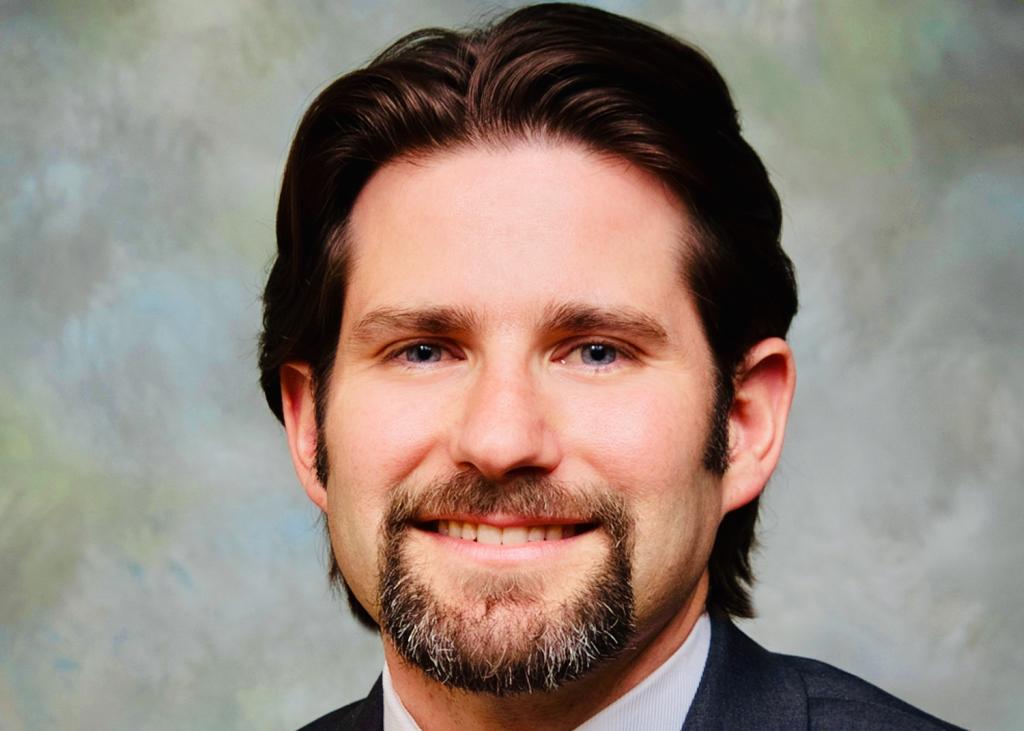
Nicholas Short holds a J.D. and Ph.D. and studies the politics of economic transformations in the United States. He is an assistant professor in Georgia Tech’s Jimmy and Rosalynn Carter School of Public Policy. Learn more about his work.